A tennis court can turn a normal movement into an injury in less than a second.
You plant your foot to chase a wide ball, stop hard on a hard court, slide across clay, or reach for a difficult shot with your wrist extended. Your body keeps moving, but your wrist or ankle doesn't quite follow.
That is how a tennis wrist sprain or tennis ankle sprain can happen.
When a joint twists, the immediate question is often simple: How can I keep it supported without making the situation worse?
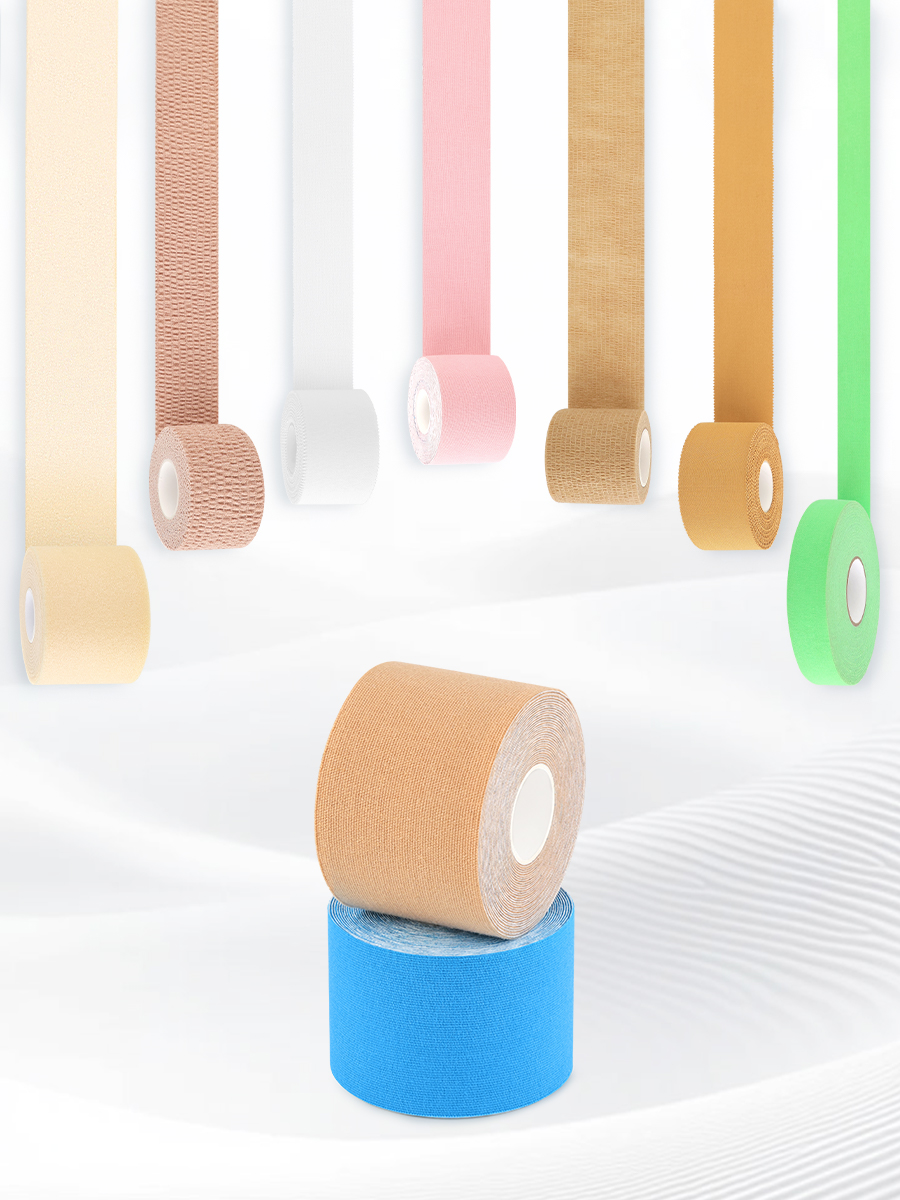
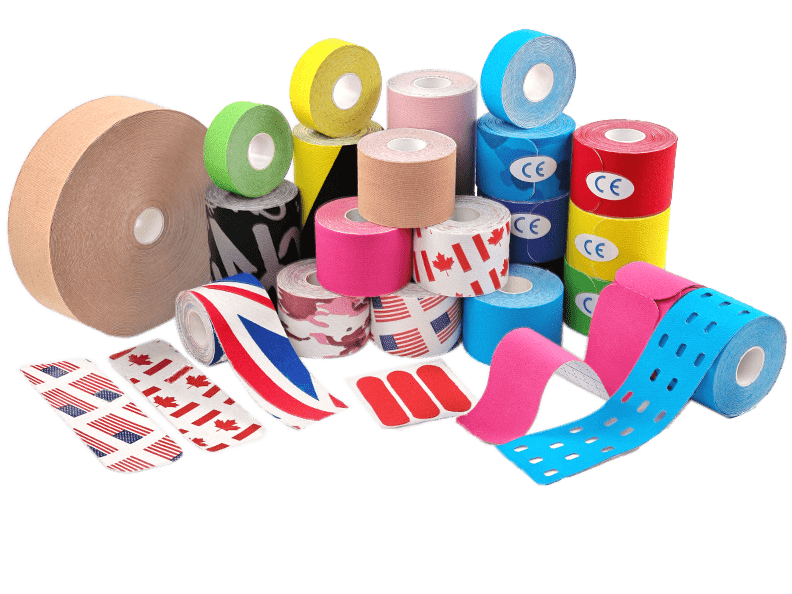
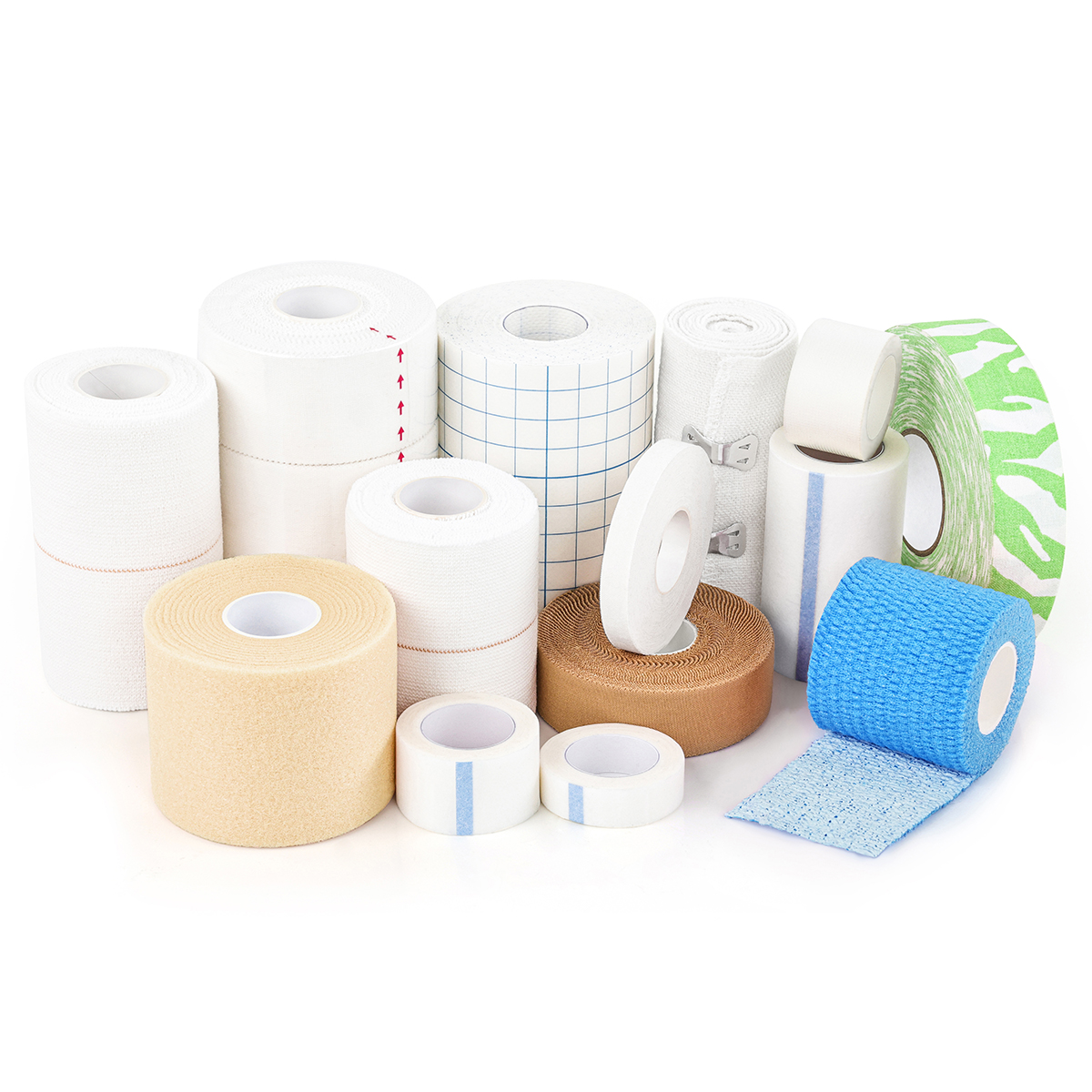
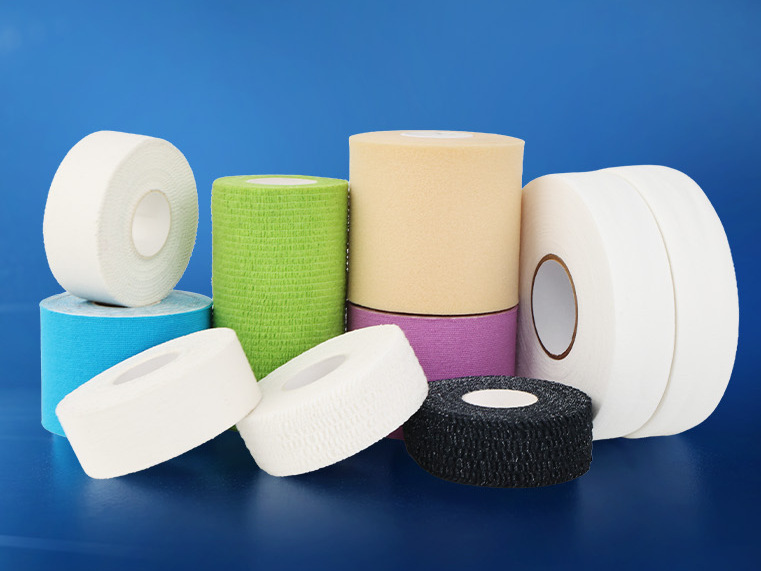
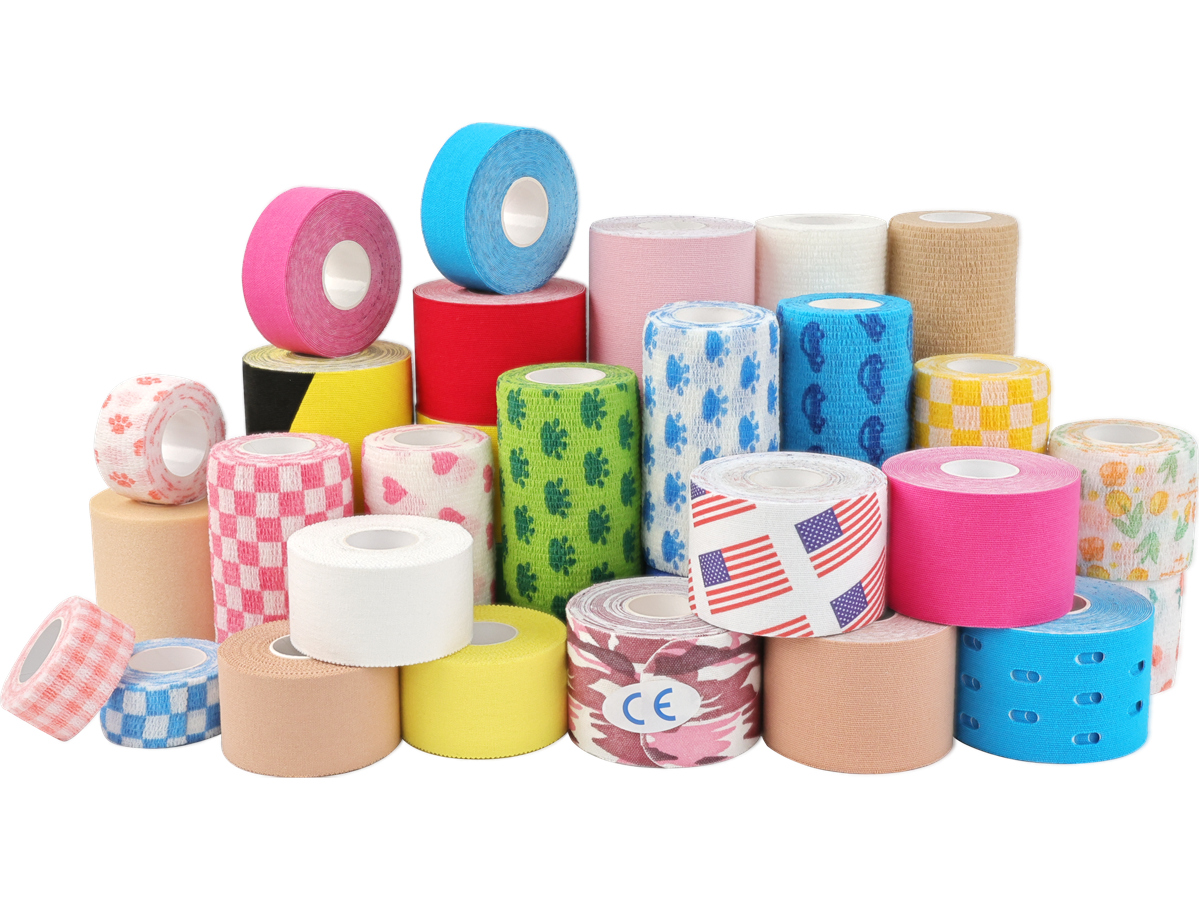
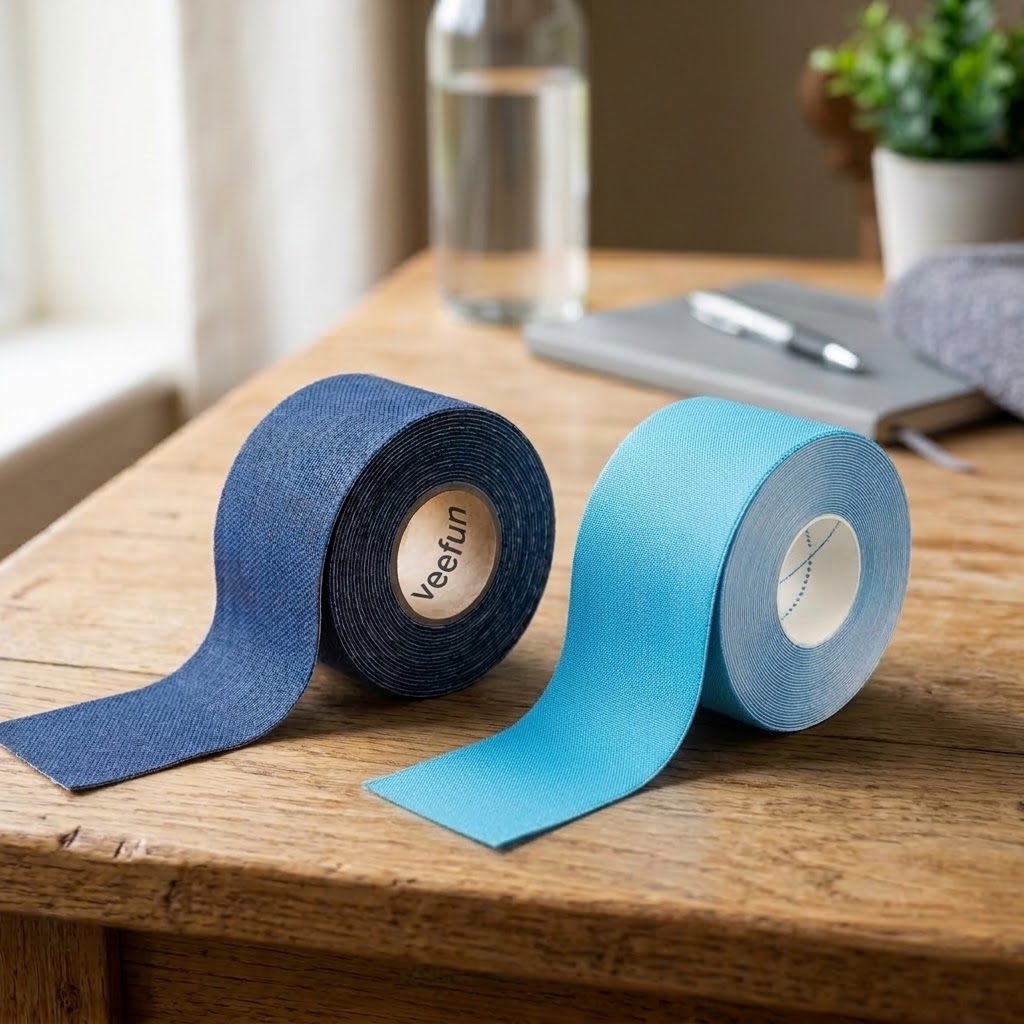
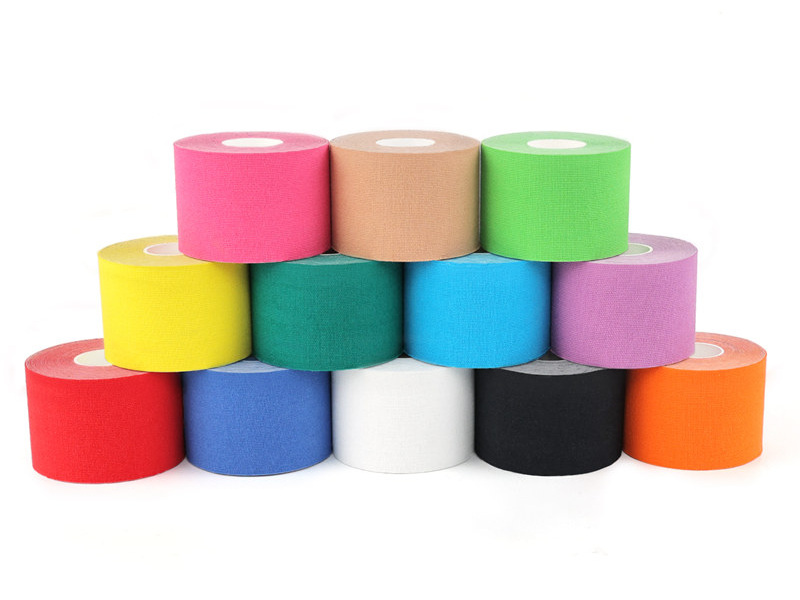
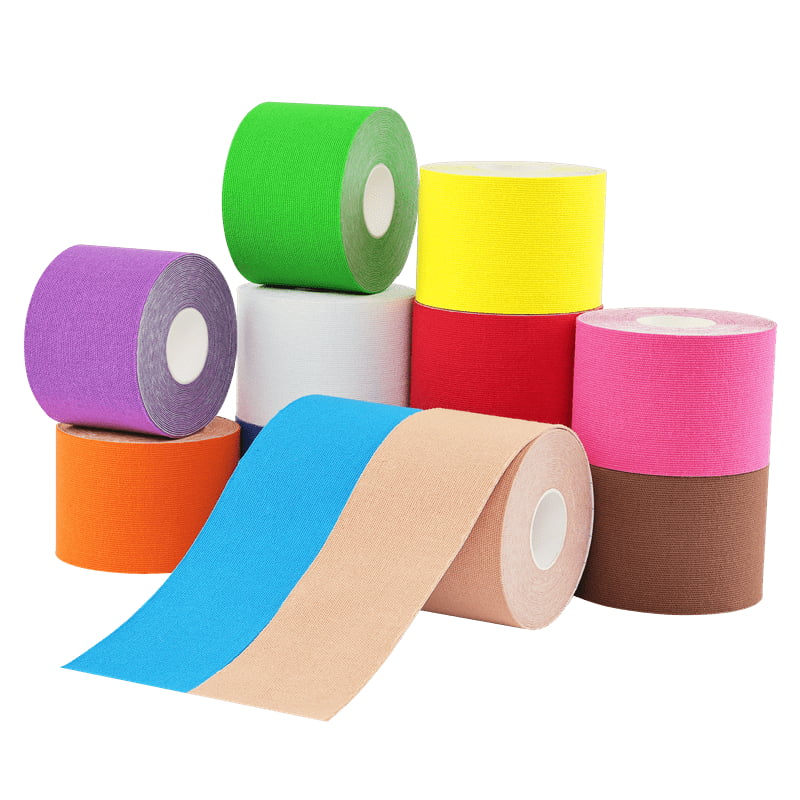
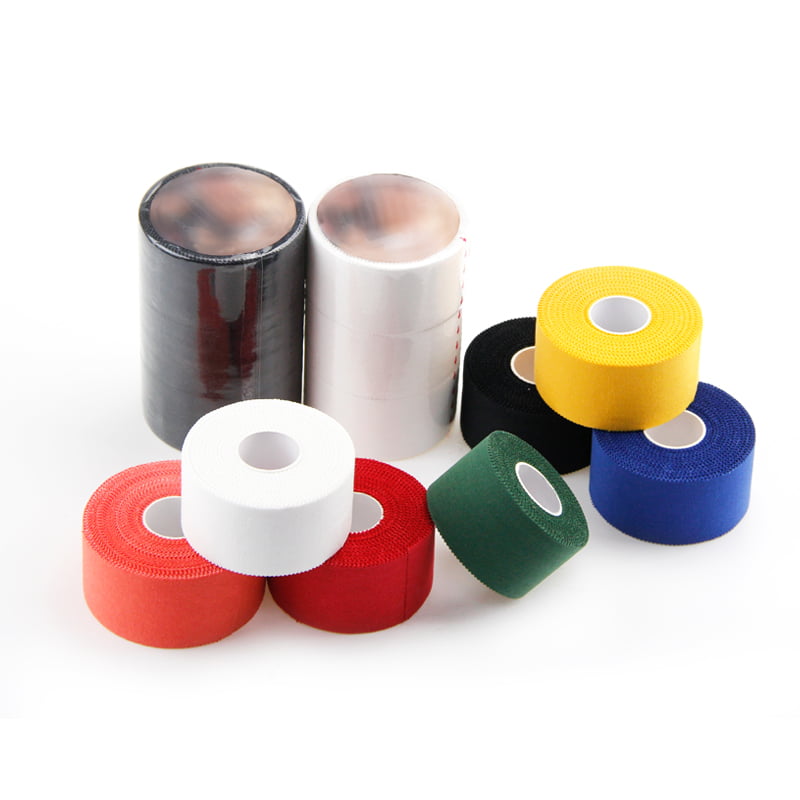
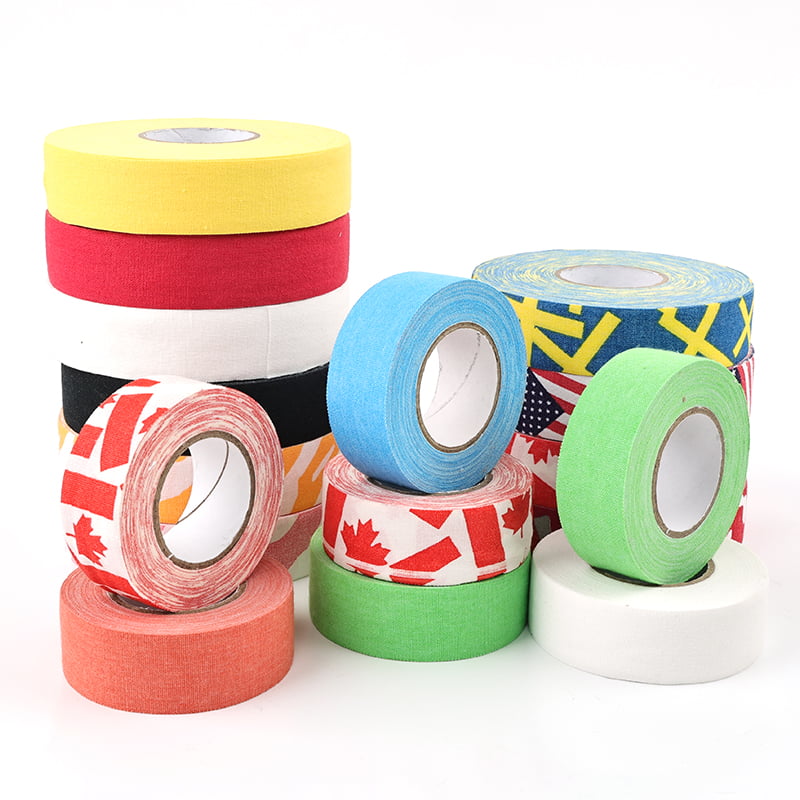
There are several types of tennis tape available, but they do very different jobs. EAB sports tape provides the strongest temporary fixation in this comparison because of its substantial thickness and low elasticity. Cotton athletic tape and sports strapping tape provide strong, rigid support with less bulk. Kinesiology tape is designed to move with the joint, while a cohesive bandage offers flexible wrapping and compression without sticking to the skin.
The right choice depends on how much movement you need to restrict.
Which Tape Provides the Most Support for Tennis?
| Tape Type | Elasticity | Support Strength | Movement Restriction | Best Tennis Use |
|---|---|---|---|---|
| EAB Sports Tape | Low | ★★★★★ | Very High | Emergency fixation after a wrist or ankle sprain |
| Cotton Athletic Tape | None | ★★★★☆ | High | Joint support and return-to-play strapping |
| Sports Strapping Tape | None | ★★★★☆ | High | Rigid strapping and joint stabilization |
| Cotton Kinesiology Tape | High | ★★☆☆☆ | Low | Support while maintaining normal movement |
| Cohesive Bandage | High | ★★☆☆☆ | Low–Medium | Flexible wrapping and compression |
This ranking is about mechanical support and movement restriction, not about whether a single tape can heal an injury.
That distinction is important. A tape with very little stretch is useful when unwanted movement needs to be controlled. A highly elastic tape is useful when the joint still needs to move normally.
1. EAB Sports Tape: The Strongest Choice for Emergency Fixation
When a wrist or ankle has just been twisted, and your priority is strong temporary fixation, EAB sports tape is the first option I would consider.
The main reason is its thickness.
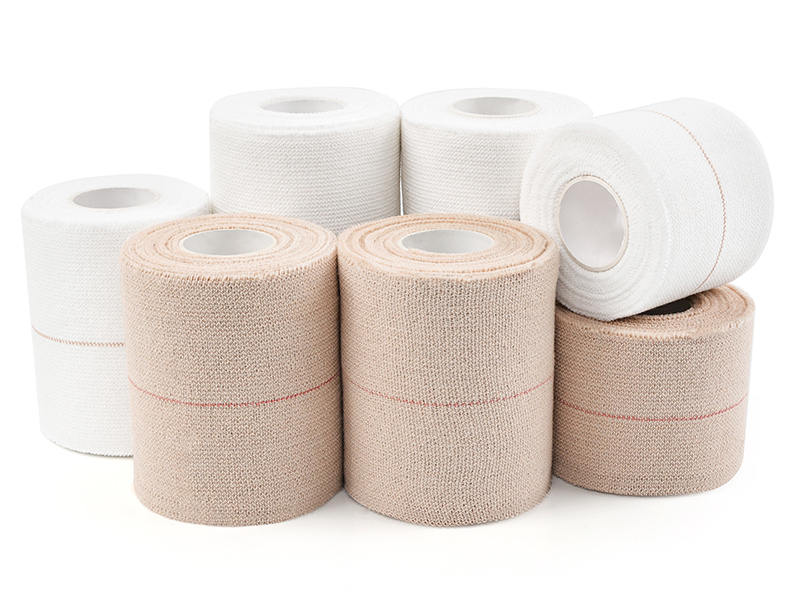
One layer of EAB sports tape is approximately three times as thick as conventional athletic tape or rigid sports strapping tape. It also has a small amount of elasticity, allowing it to conform around the wrist or ankle while still providing substantial resistance to movement.
The difference becomes more obvious when several layers are applied.
With each additional wrap, the thickness accumulates around the joint. After multiple layers, EAB can create a firm, highly structured wrap that feels almost like a lightweight external cast.
That combination makes it particularly useful when a tennis player needs to temporarily reduce movement after:
- An ankle roll
- A wrist twist
- An awkward landing
- A sudden change of direction
- A painful impact
- An unexpected load on the wrist
Why is EAB stronger than thinner athletic tape?
Three factors make the difference:
Thickness: Each layer adds considerably more material around the joint.
Low elasticity: EAB does not simply stretch with every movement.
Layer accumulation: Multiple wraps create a much thicker, more stable structure than conventional thin strapping tape.
This is why I put EAB above cotton athletic tape and sports strapping tape when the specific goal is maximum temporary support.
My own EAB wrist experience
There is a personal reason I have become particularly positive about EAB.
I am an office worker, and spending long hours operating a keyboard and mouse eventually caused wrist problems that were consistent with TFCC-related pain. Rotating my wrist could be painful, and I had experienced similar symptoms before.
In previous episodes, the discomfort could last two or three days and sometimes close to a week.
One day, I happened to have a roll of EAB sports tape sitting on my desk. It was a sample left over after testing a customer's tape.
I wrapped my wrist with it to give the joint more support and reduce unnecessary movement while I continued working.
By the time I finished work that evening, the pain had noticeably eased.
That is obviously only my personal experience, not evidence that EAB sports tape treats TFCC injuries. What I found useful was the firm support and reduced wrist movement.
That experience changed the way I look at EAB.
If I need strong support or temporary fixation, EAB is the tape I would choose first.
For an actual injury, however, taping should not replace medical assessment. Severe pain, significant swelling, deformity, numbness, weakness, or inability to use the wrist or to put weight on the ankle warrants professional evaluation.
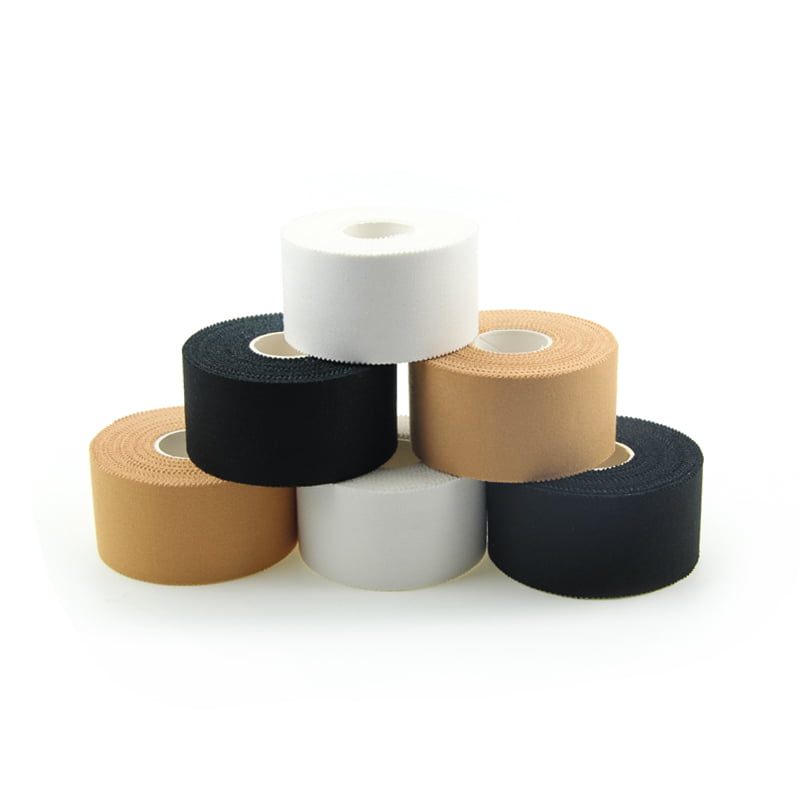
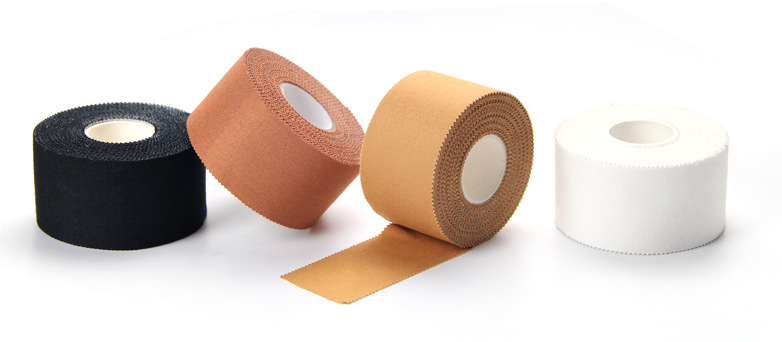
2. Cotton Athletic Tape: Strong Support With Less Bulk
Cotton athletic tape provides a very different feel from EAB.
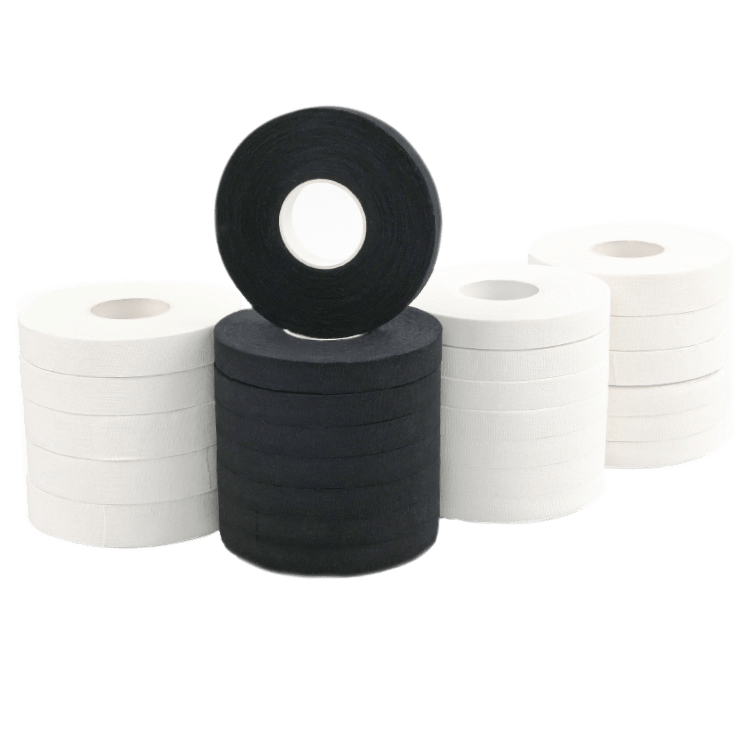
It has essentially no elasticity, so properly applied strapping can effectively restrict unwanted joint movement. It is a traditional choice for athletic taping and is particularly useful when an athlete wants support without building up a very thick wrap.
For tennis, that can mean supporting an ankle during lateral movement or stabilizing a wrist during repeated strokes.
Consider what happens when you chase a wide ball and suddenly plant your foot.
The ankle has to handle body weight, lateral momentum, and rapid deceleration simultaneously. On a hard court, a sudden stop can place considerable stress on the ankle. On clay, a poorly controlled slide can also end with the foot rolling as the player regains balance.
A rigid athletic tape can help limit excessive movement when used as part of an appropriate taping technique.
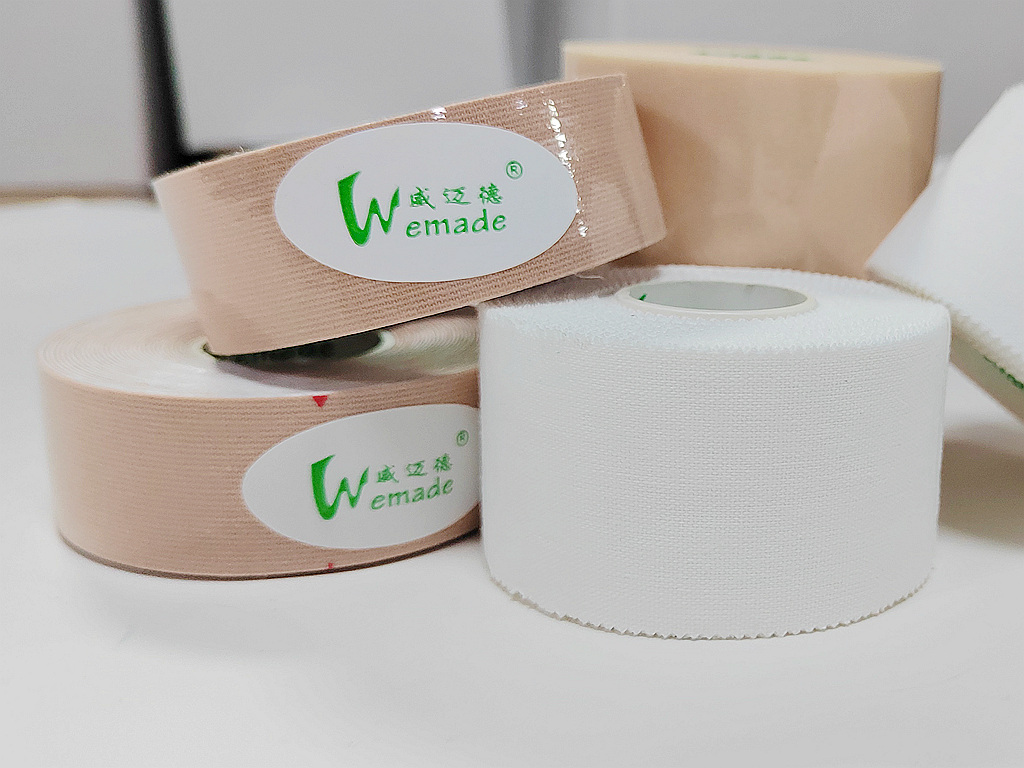
Cotton athletic tape is also commonly referred to as rigid zinc oxide tape or zinc oxide sports tape in some markets, although adhesive formulations vary across products and manufacturers. These terms should therefore not automatically be treated as interchangeable.
Compared with EAB, the advantage of cotton athletic tape is simple:
strong restriction without the extra thickness.
3. Sports Strapping Tape: Rigid Support for Returning to the Court
Sports strapping tape belongs in much the same practical category as cotton athletic tape.
It is generally non-stretch and is designed to provide mechanical support rather than unrestricted movement.
The main difference is construction.
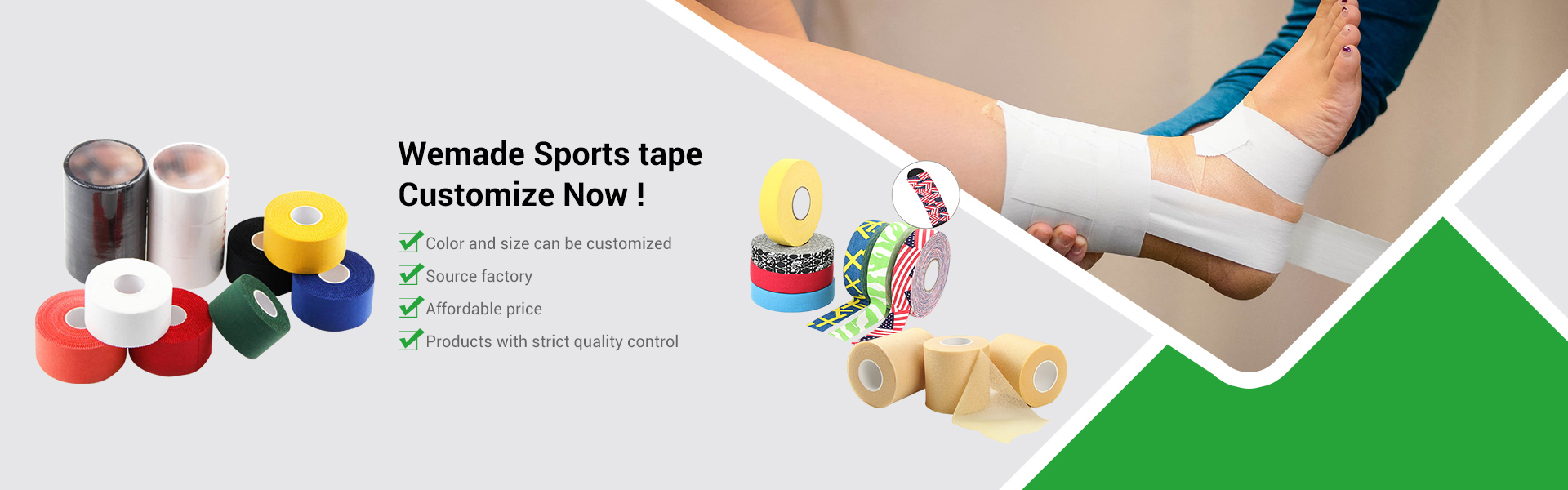
Cotton athletic tape uses a cotton-based fabric, while sports strapping tape is commonly manufactured from synthetic materials such as rayon or other nonwoven constructions, depending on the product.
That material difference can affect handling, abrasion resistance, surface feel, and durability.
From a tennis player's perspective, however, both products serve a similar purpose.
They are useful when you want to limit unwanted joint movement while keeping the tape thinner than EAB.
This makes them especially relevant during the transition back to tennis after an injury.
For example, a player who has recovered sufficiently to return to training may still want additional ankle support during lateral movements, split steps, and sudden changes of direction.
The tape does not make the ankle “uninjured.” Instead, it provides an external layer of mechanical support while the player gradually returns to activity.
4. Kinesiology Tape: Support Without Locking the Joint
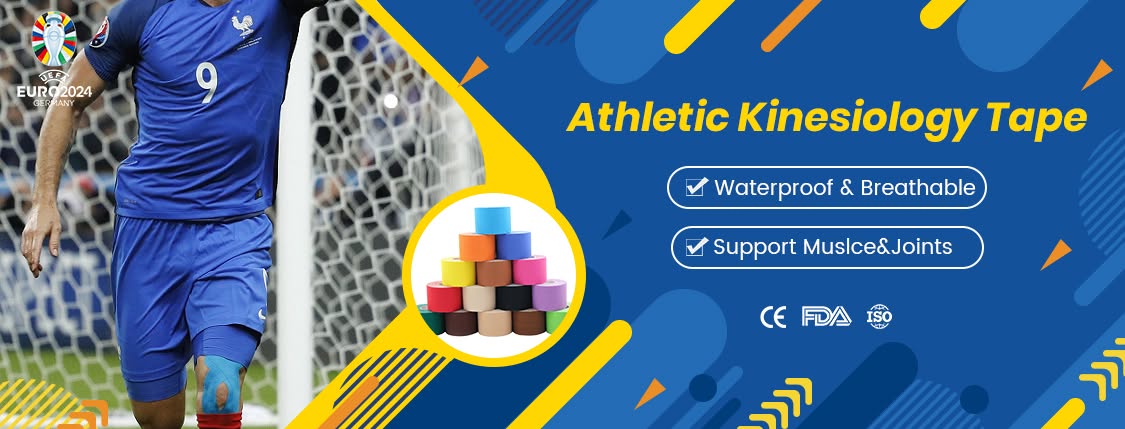
Kinesiology tape takes almost the opposite approach.
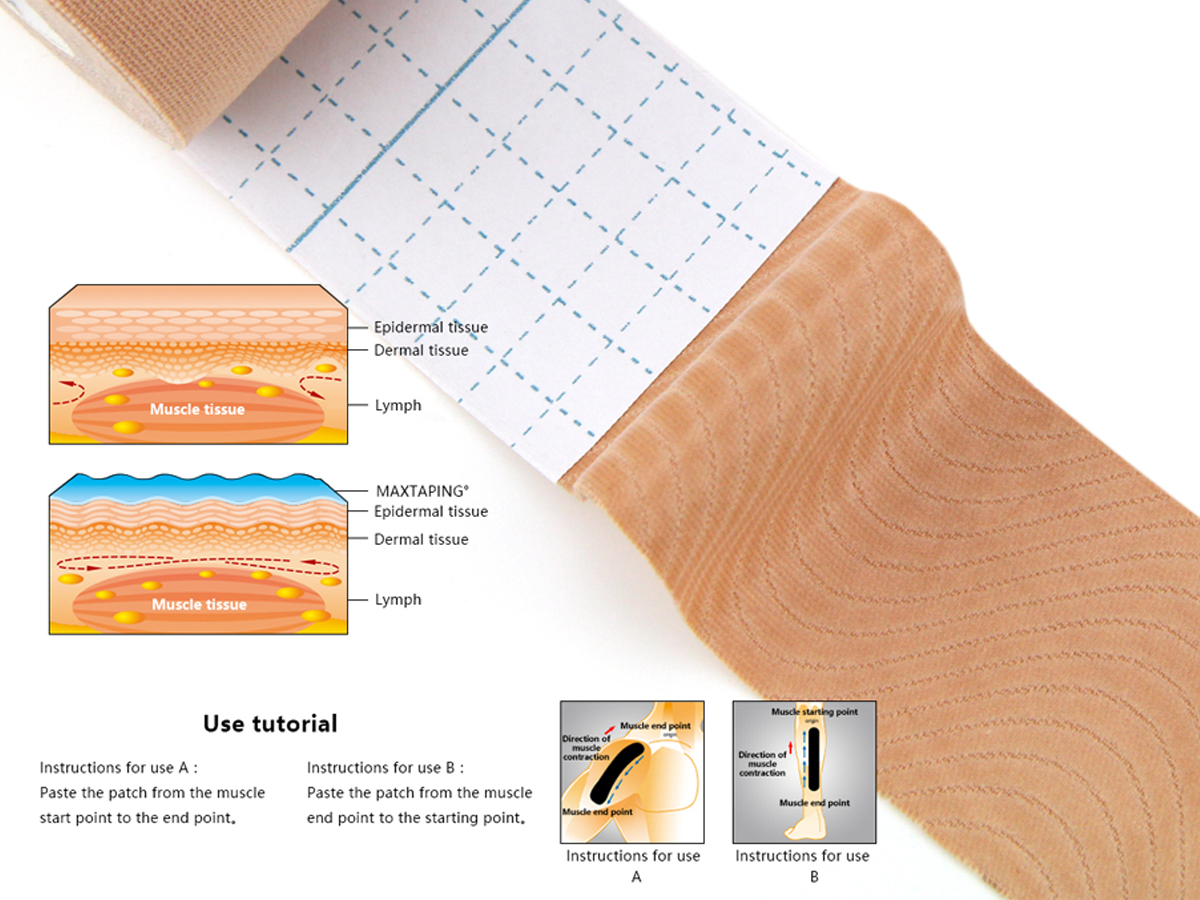
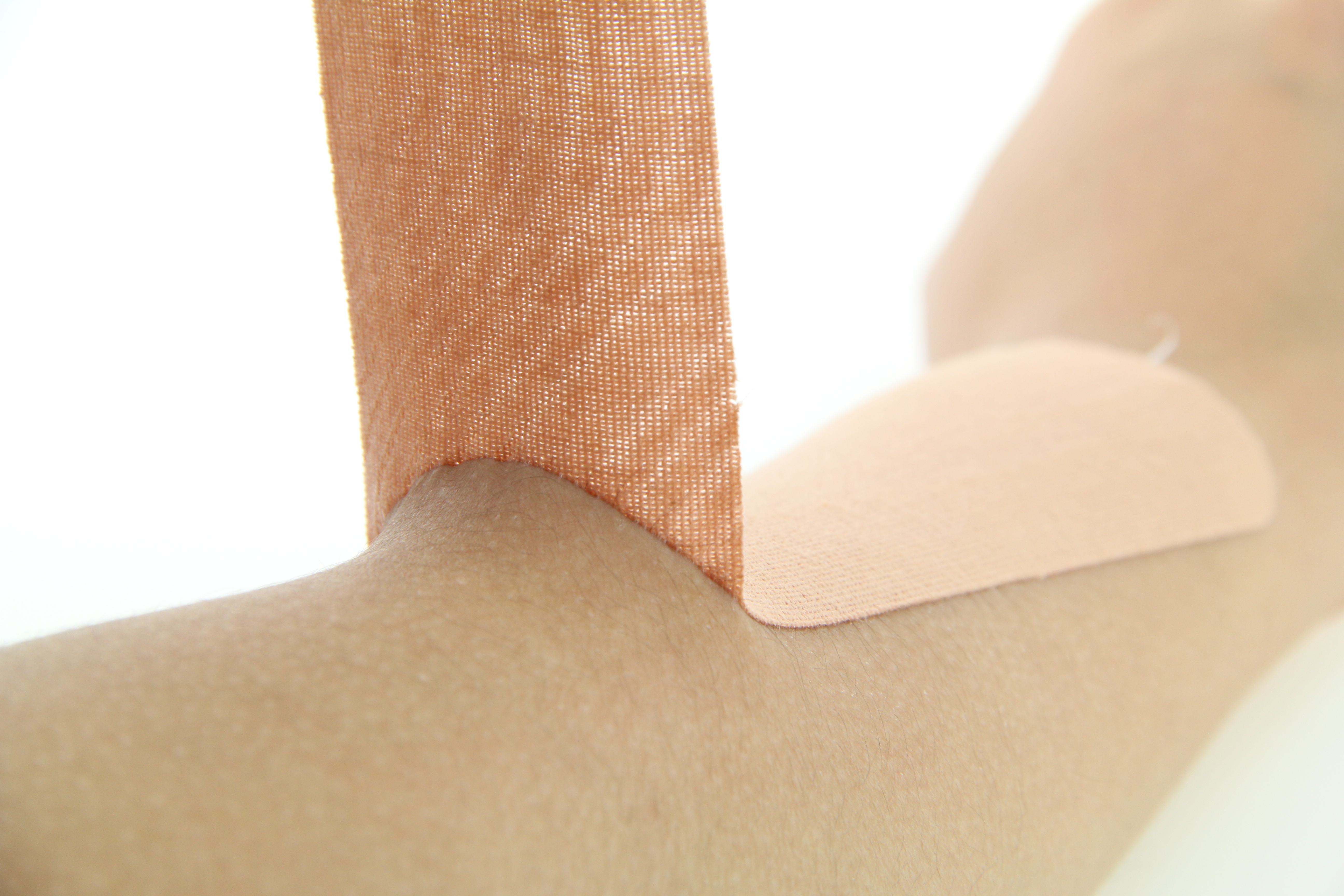
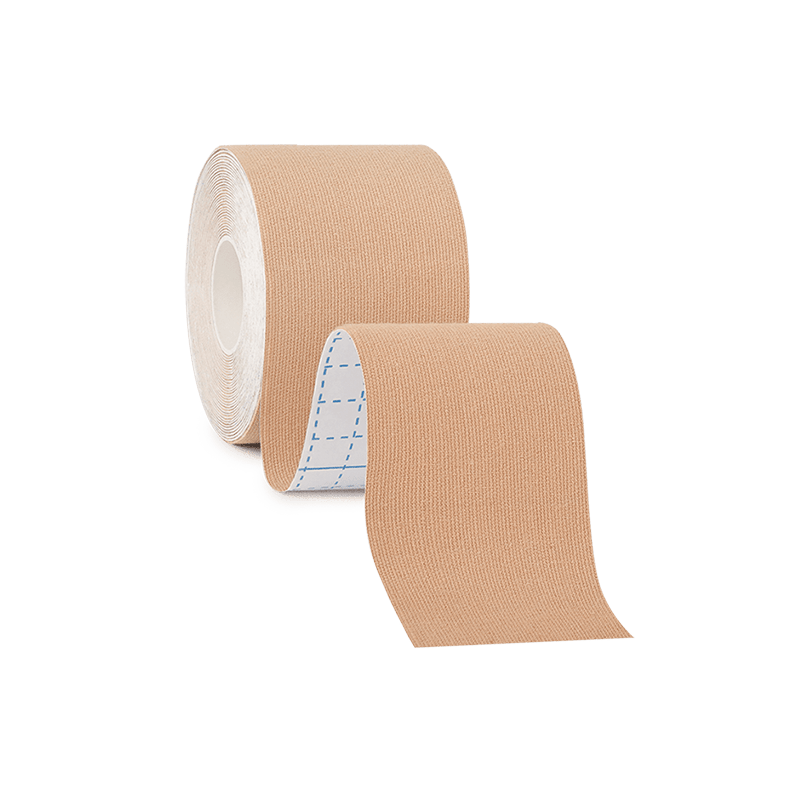
It has substantial elasticity and is designed to stretch and move with the body.
That means it does not provide the same level of mechanical restriction as EAB, cotton athletic tape, or rigid sports strapping tape.
And that is exactly why it is useful.
A healthy tennis player does not necessarily want to lock down the wrist or ankle.
During a topspin forehand, the wrist and forearm need to coordinate rapid racket-head acceleration. During a serve, the wrist and forearm contribute to a complex sequence of movement rather than staying fixed in one position.
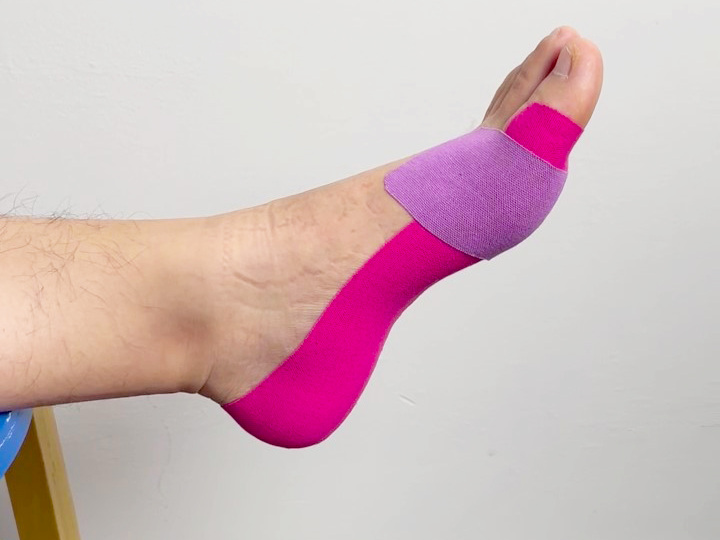
For players who want some external support without significantly changing their normal movement, kinesiology tape is a much more logical choice.
It can be used for:
- Pre-match joint support
- Healthy joints that need additional protection
- Training sessions
- Dynamic movement
- Return-to-play situations where mobility is still important
The simplest way to understand the difference is:
Rigid tape restricts movement. Kinesiology tape supports movement.
So if your ankle has just rolled and your priority is to restrict movement, kinesiology tape would not be my first choice.
If your ankle is healthy and you want support without interfering with footwork, the answer can be completely different.
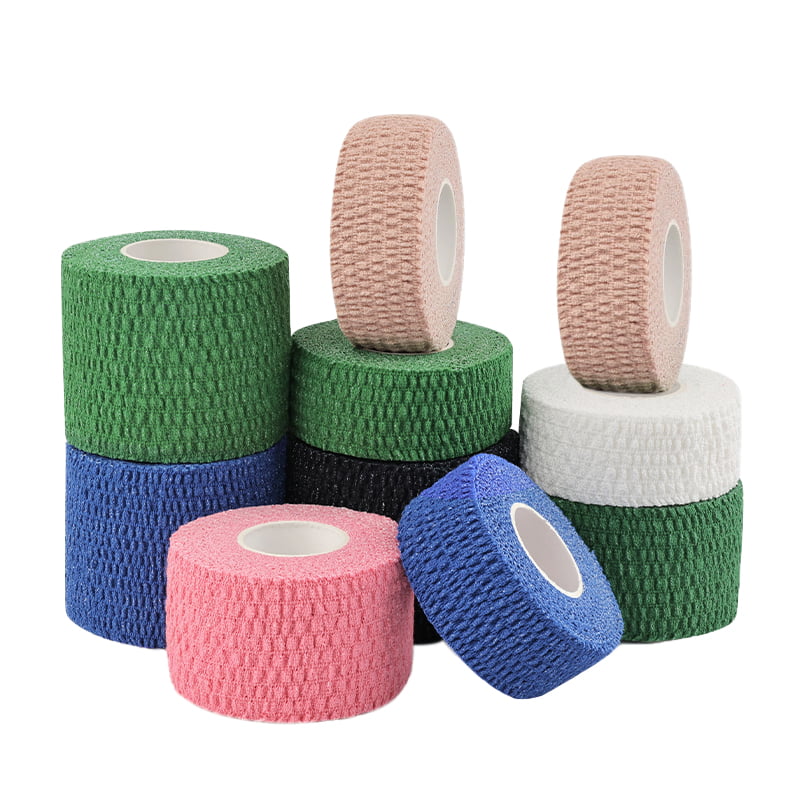
5. Cohesive Bandage: Flexible Wrapping Without Skin Adhesive
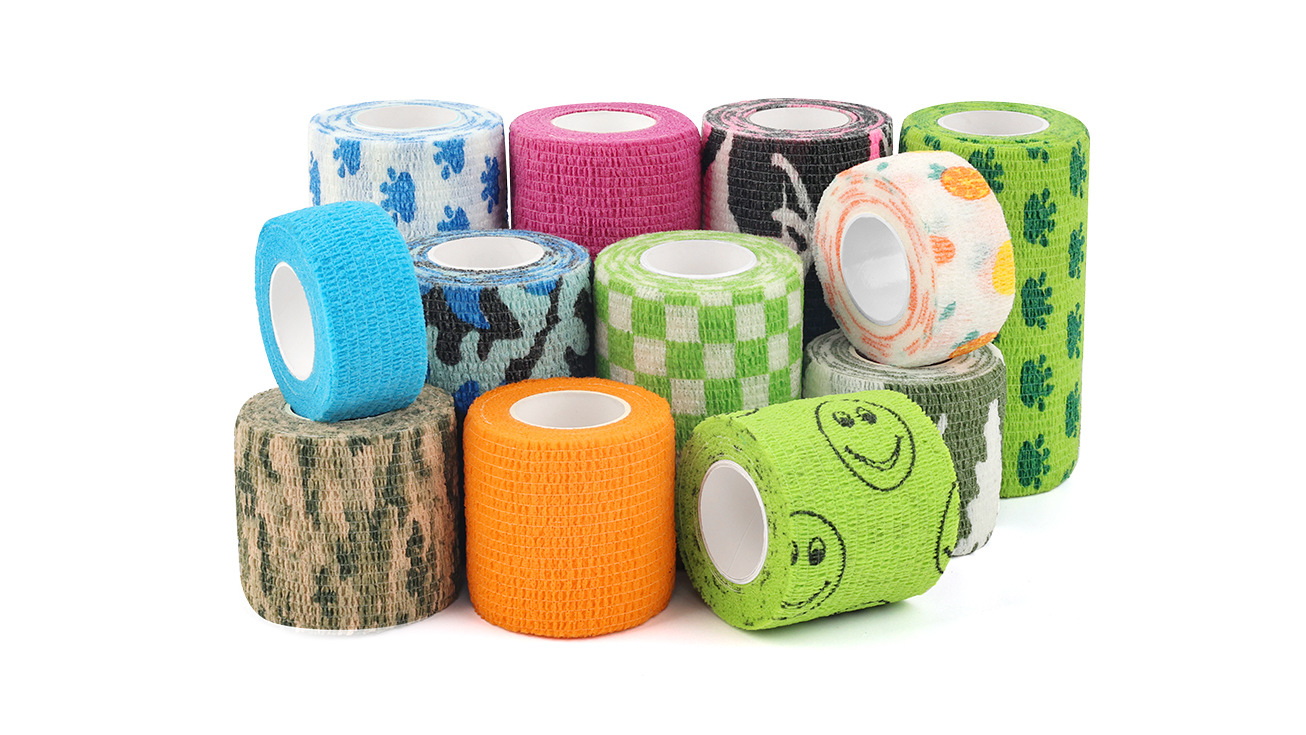
A cohesive bandage is another elastic option, but its construction is fundamentally different from kinesiology tape.
It does not stick directly to the skin.
Instead, it sticks to itself.
That makes it convenient for quickly wrapping a wrist or ankle when you want flexible support or compression without putting adhesive directly on the skin.
It can be useful for:
- Wrapping a wrist
- Wrapping an ankle
- Providing light compression
- Holding a dressing in place
- Creating a quick temporary wrap
However, a cohesive bandage has an obvious limitation.
It works best when there is a body area that can be wrapped around repeatedly, and the material can adhere to itself. The wrist and ankle are relatively easy.
A shoulder is much more difficult.
Because a cohesive bandage does not stick to the skin, it cannot simply be placed across a large, mobile shoulder and expected to stay in the same position.
So while it can be a useful alternative for certain wrist and ankle applications, it is not a universal substitute for kinesiology tape.
Wrist or Ankle Sprain: Which Sports Tape Should You Use?
The answer changes depending on the situation.
After a sudden wrist or ankle sprain
If your immediate priority is strong temporary fixation, EAB sports tape provides the highest level of support among these five options.
Its greater thickness and low elasticity allow multiple layers to form a firm wrap around the injured area.
When you want strong support with less bulk
Cotton athletic tape and sports strapping tape are better suited to conventional rigid strapping.
They are thinner than EAB but can still provide substantial restriction when applied correctly.
When the joint is healthy and you want to keep moving
Kinesiology tape is the more appropriate choice.
Its elasticity allows the wrist or ankle to continue moving through a much wider range.
When you want flexible wrapping without skin adhesive
A cohesive bandage is convenient for wrists and ankles when compression and easy application are more important than rigid fixation.
Support and Price: How the Five Tennis Tapes Compare
For mechanical support and movement restriction, the practical ranking is:
1. EAB sports tape
2. Cotton athletic tape/sports strapping tape
3. Kinesiology tape / cohesive bandage
The price ranking is different.
For products with the same width and length, the typical price order is:
Kinesiology tape > Sports strapping tape > EAB sports tape > Cotton athletic tape > Cohesive bandage
That makes EAB an interesting middle-ground option.
It provides substantially greater thickness than conventional athletic or strapping tape, while its price can remain below that of kinesiology tape and sports strapping tape in an equivalent-size comparison.
For users who specifically need strong temporary support, that combination of thickness, fixation, and cost is one of EAB's biggest practical advantages.
The Right Tennis Tape Depends on the Job
| Situation | Best Choice | Main Reason |
|---|---|---|
| Fresh wrist or ankle sprain requiring strong temporary fixation | EAB Sports Tape | Thick, low-stretch, and highly restrictive |
| Strong support with less bulk | Cotton Athletic Tape | Non-stretch and suitable for athletic strapping |
| Rigid joint strapping | Sports Strapping Tape | Non-stretch construction |
| Healthy joint needing support during tennis | Kinesiology Tape | High elasticity preserves movement |
| Flexible wrist or ankle wrapping | Cohesive Bandage | Sticks to itself and provides compression |
If a tennis player asks me to choose one tape specifically for strong emergency support after a sprain, my answer is EAB sports tape.
But if the goal is protecting a healthy joint while keeping it moving freely, my answer changes completely: kinesiology tape.
FAQ
What is the best tennis tape for a sprained ankle during tennis?
For strong temporary fixation, EAB sports tape provides the highest mechanical support among the five tape types compared here. Its substantial thickness and low elasticity make it particularly suitable for situations where movement needs to be restricted. Cotton athletic tape and sports strapping tape are thinner alternatives for rigid support.
What tape should I use for a tennis wrist sprain?
If the wrist needs firm temporary support, EAB sports tape is the strongest option in this comparison. Cotton athletic tape and sports strapping tape can also provide strong restriction with less bulk. Kinesiology tape is better suited to situations where you want support while preserving wrist movement.
Is kinesiology tape good for tennis players?
Yes, particularly when the goal is support without significantly restricting movement. Tennis involves rapid wrist and ankle movements during serves, topspin strokes, split steps, and changes of direction. Kinesiology tape is better suited to those dynamic situations than a rigid strapping tape when the joint does not require immobilization.
Is a cohesive bandage good for a tennis ankle?
A cohesive bandage can be useful for flexible wrapping and compression around the ankle. It sticks to itself rather than the skin, making it easy to apply and remove. However, it provides less mechanical restriction than EAB, cotton athletic tape, or sports strapping tape.
Can I play tennis after spraining my wrist or ankle?
Tape can provide temporary external support, but it does not determine whether an injured joint is ready for tennis. Severe pain, significant swelling, instability, deformity, numbness, weakness, or difficulty bearing weight are reasons to stop playing and seek professional medical assessment.
What is the difference between rigid sports tape and kinesiology tape?
The main difference is elasticity. Rigid sports tape is designed to restrict unwanted movement and provide mechanical joint support. Kinesiology tape is highly elastic and moves with the body, making it more suitable for maintaining a range of motion.
Is EAB sports tape stronger than athletic tape?
For the comparison discussed here, yes. EAB sports tape is substantially thicker—approximately three times the thickness of conventional athletic or rigid sports strapping tape per layer—and has only slight elasticity. When multiple layers are wrapped around a wrist or ankle, they create a much thicker, firmer support structure.