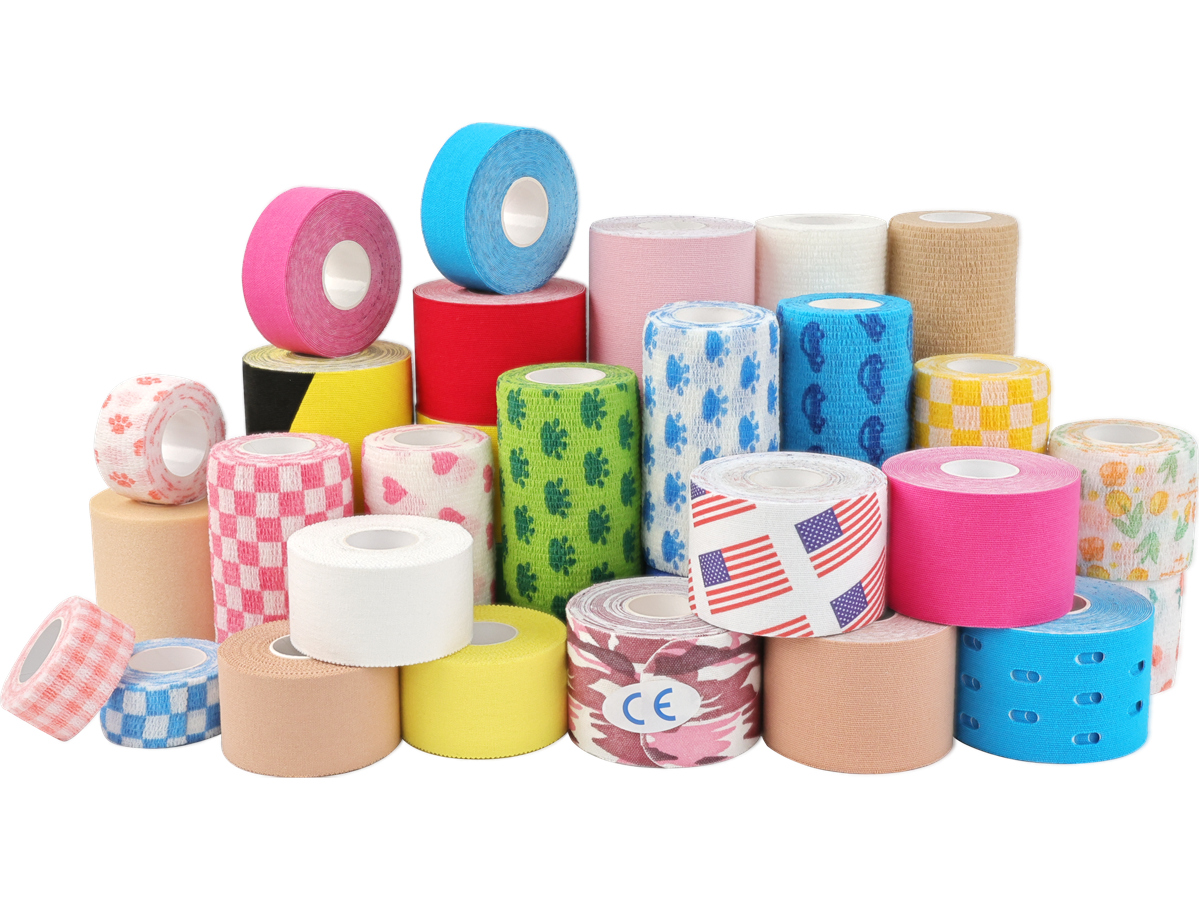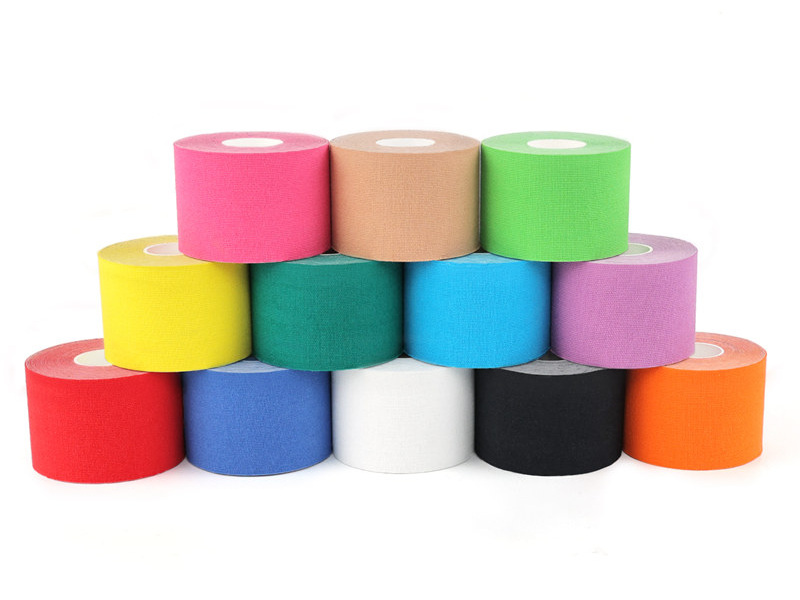


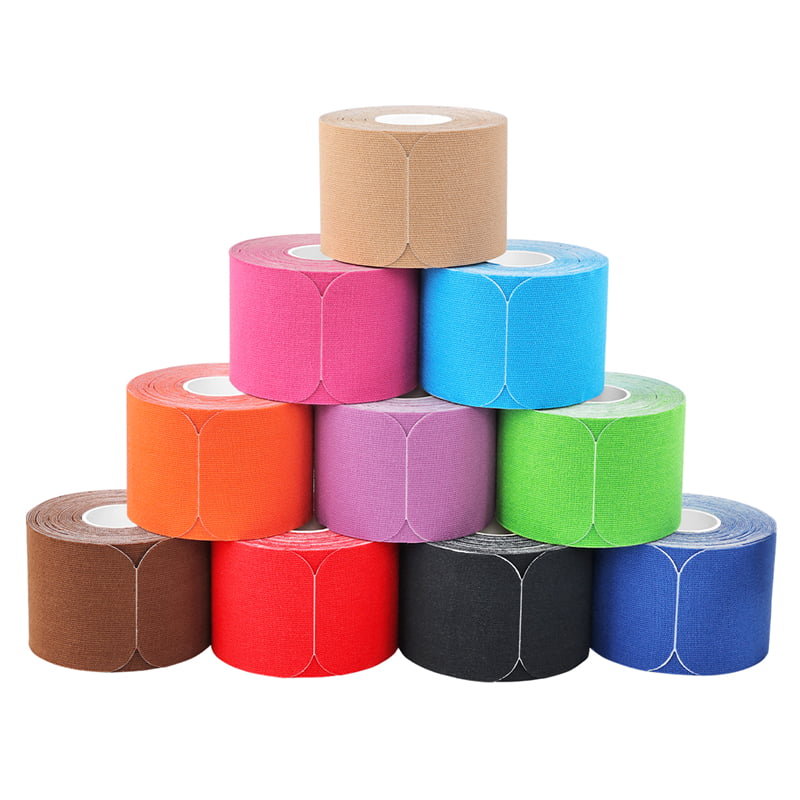
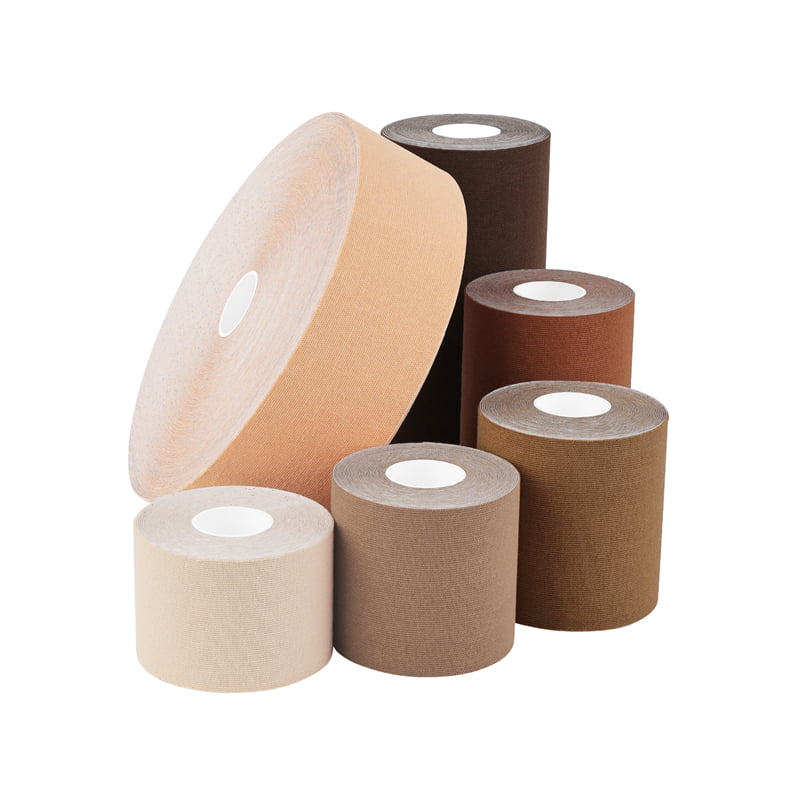

When sourcing sports tape, kinesiology tape, or athletic tape, material selection affects much more than product performance. It can also influence your unit cost, selling price, market positioning, and profit margin.
Cotton is often the more economical option and works well for high-volume products. Nylon, on the other hand, usually costs more but can support a higher selling price when its stretch, recovery, durability, and performance advantages are important to the target customer.
So, is cotton or nylon more profitable?
The short answer is: neither material is automatically more profitable. Cotton is often better for volume-driven products, while nylon can offer stronger margins for premium, performance-focused products.
The right choice depends on your target market, product specifications, selling price, and order volume.
Cotton vs. Nylon: Quick Comparison
| Factor | Cotton Kinesiology Tape | Nylon Kinesiology Tape |
|---|---|---|
| Material Cost | Lower | Higher |
| Product Positioning | Mainstream / Everyday | Performance / Premium |
| Skin Feel | Soft and familiar | Smooth and flexible |
| Stretch | Moderate | High |
| Elastic Recovery | Good | Excellent |
| Durability | Good | Excellent |
| Selling Price Potential | Medium | Higher |
| Price Competition | Higher | Lower |
| Best Business Strategy | High-volume sales | Higher-margin products |
| Best For | Retailers, wholesalers, general sports | Sports brands, premium products, performance markets |
The important point is that material cost should not be confused with product profitability.
A cheaper tape does not necessarily generate a higher profit margin.
1. Cotton Tape: Lower Cost and Easier Volume Sales
Cotton remains a popular material for sports and athletic tape because it offers a familiar combination of comfort, breathability, flexibility, and cost control.
For kinesiology tape manufacturers and wholesalers, one of the biggest advantages is its ability to support competitive pricing.
A cotton tape product may be a good choice when your customers are primarily looking for:
- Competitive wholesale pricing
- Reliable everyday performance
- Comfortable skin contact
- Large-volume purchasing
- Standard specifications
- Fast-moving retail products
This makes cotton particularly suitable for mass-market kinesiology tape and high-volume wholesale products.
However, cotton products can face stronger price competition. When several suppliers offer similar specifications, buyers may compare products mainly by price, packaging, adhesive quality, and delivery terms.
That can put pressure on margins.
When Cotton Makes More Commercial Sense
Cotton can be attractive when your business model depends on sales volume rather than a high margin per roll.
For example:
Lower unit cost → competitive wholesale price → easier market entry → larger order volume → stable overall profit
This strategy can work especially well for distributors, sports retailers, and brands targeting price-sensitive customers.
2. Nylon Tape: Higher Cost, Higher Pricing Potential
Nylon is generally positioned as a more performance-oriented material.
Compared with traditional cotton, nylon can provide advantages in areas such as stretch, recovery, flexibility, and resistance to repeated movement.
These characteristics can make nylon attractive for products designed for:
- High-performance sports
- Dynamic movement
- Professional athletes
- Outdoor activities
- Premium sports brands
- Performance-focused retail products
The downside is straightforward: the material and finished product can cost more.
But higher cost does not automatically mean lower profitability.
If the performance characteristics allow you to position the product at a higher price point, the additional material cost can potentially be recovered through a higher selling price.
For example:
Higher material cost → better performance positioning → higher retail price → higher gross profit per roll
This is why nylon can be interesting for brands that are not competing purely on price.
3. Which Material Has the Higher Profit Margin?
This is where the comparison becomes more complicated.
Suppose a buyer has two products:
Cotton tape
- Lower manufacturing cost
- Lower wholesale price
- Large potential sales volume
- Strong price competition
Nylon tape
- Higher manufacturing cost
- Higher wholesale price
- More premium positioning
- Greater opportunity for product differentiation
If the nylon product can command a sufficiently higher selling price, its gross profit per roll may be higher despite its higher production cost.
But if customers in your target market are highly price-sensitive, the additional cost of nylon may be difficult to pass on.
Therefore:
Cotton may offer better profitability when:
- Your market is price-sensitive
- You sell large volumes
- Your customers prioritize affordability
- The product uses standard specifications
- You compete heavily on wholesale price
Nylon may offer better profitability when:
- Customers value performance
- You sell premium products
- Your brand has stronger differentiation
- Higher retail prices are accepted
- Stretch and recovery are important selling points
The question is not simply “Which material is cheaper?”
It is:
“How much additional selling price can this material generate compared with its additional cost?”
4. Don't Compare Material Cost Alone
For B2B buyers, the real product cost includes much more than the fabric.
A practical cost calculation should consider:
Total Product Cost = Material + Adhesive + Coating + Converting + Packaging + QC + Logistics
Other factors can also affect your actual margin, including:
- Order quantity
- Custom dimensions
- Printing requirements
- Packaging format
- Adhesive formulation
- Roll length
- Product thickness
- Custom labeling
- Defect and waste rates
- Shipping method
For example, a nylon tape with a higher material cost may still be commercially attractive if it requires less aggressive price competition and generates a higher average selling price.
Likewise, a low-cost cotton tape may deliver excellent returns when purchased in large quantities and sold through a high-volume distribution channel.
5. Cotton vs. Nylon for Private Label Kinesiology Tape
Material selection becomes even more important when developing a private label kinesiology tape.
A private-label brand usually has more flexibility than a generic wholesaler because it can differentiate the product through:
- Material
- Adhesive
- Stretch
- Roll size
- Packaging
- Branding
- Product claims
- Target sport
- Retail positioning
Cotton Private Label
Cotton is a practical choice for brands looking to launch a competitively priced product.
It can work well for:
- General fitness
- Running
- Gym products
- Sports retailers
- Medical and rehabilitation channels
- Entry-level kinesiology tape
Nylon Private Label
Nylon can be more suitable for brands building a performance-oriented product line.
It may be a better fit for:
- Professional sports
- High-performance training
- Outdoor sports
- Premium fitness brands
- Performance recovery products
Instead of asking which material is universally better, private-label buyers should ask:
Who is going to buy the product, what are they willing to pay, and what performance benefits justify that price?
6. Which Material Should Wholesalers Choose?
For wholesalers, the answer often comes down to sales volume versus margin per unit.
If your customers mainly ask:
“Can you give me the lowest price?”
Cotton may be the easier product to sell.
If they ask:
“Can you provide a higher-performance tape with better stretch and recovery?”
Nylon may create more room for differentiation.
For larger distributors, a two-material product portfolio can actually be more effective than choosing only one.
For example:
Cotton Series
→ Competitive price
→ High-volume market
→ Everyday sports use
Nylon Series
→ Premium positioning
→ Performance market
→ Higher selling price
This allows one brand to cover different customer segments without forcing every customer into the same price range.
7. How to Calculate the More Profitable Option
Before placing a bulk order, compare the expected margin rather than simply comparing quotations.
A simple calculation is:
Gross Profit per Roll = Selling Price − Landed Product Cost
And:
Gross Margin = Gross Profit ÷ Selling Price × 100%
For example, imagine two products:
| Cotton | Nylon | |
|---|---|---|
| Landed Cost | $1.00 | $1.40 |
| Selling Price | $2.00 | $2.80 |
| Gross Profit | $1.00 | $1.40 |
| Gross Margin | 50% | 50% |
In this example, the percentage margin is the same, but nylon generates more profit per roll.
Now consider a different market where customers will only pay $2.40 for nylon:
| Cotton | Nylon | |
|---|---|---|
| Landed Cost | $1.00 | $1.40 |
| Selling Price | $2.00 | $2.40 |
| Gross Profit | $1.00 | $1.00 |
| Gross Margin | 50% | 42% |
Here, cotton becomes the stronger commercial choice.
The selling price your market will actually accept is therefore just as important as the material cost.
8. Cotton or Nylon: Which One Should You Choose?
There is no single winner.
Choose cotton if your priority is:
- Lower production cost
- Competitive wholesale pricing
- High-volume orders
- Everyday comfort
- Mainstream sports products
Choose nylon if your priority is:
- Higher performance
- Better stretch and recovery
- Premium positioning
- Product differentiation
- Higher selling prices
For many brands, the most practical strategy is not choosing one material exclusively.
A cotton product can drive volume, while a nylon product can increase average order value and provide a higher-end option.
That gives you more flexibility when serving different retail channels and customer segments.
What Should You Ask Your Kinesiology Tape Manufacturer?
Before requesting a quotation, don't simply ask:
“How much does cotton tape cost?”
Give your manufacturer the specifications that affect the final product cost, including:
- Material
- Tape width
- Roll length
- Fabric weight
- Stretch
- Adhesive type
- Color
- Packaging
- Printing
- Order quantity
- Target market
A reliable manufacturer should be able to compare cotton and nylon based on your target selling price and application, rather than recommending the more expensive material automatically.
FAQ
Is nylon kinesiology tape more expensive than cotton?
Usually, nylon products have a higher material and production cost than standard cotton products. However, the final difference depends on fabric weight, adhesive, dimensions, roll length, and customization.
Is nylon tape more profitable than cotton tape?
Not automatically. Nylon can generate higher profit per roll when its performance advantages support a higher selling price. Cotton can be more profitable for high-volume, price-sensitive markets.
Which material is better for private label kinesiology tape?
Cotton is generally suitable for competitively priced, high-volume products, while nylon is attractive for premium and performance-oriented private-label products.
Should wholesalers choose cotton or nylon?
Wholesalers should consider their customers' price sensitivity, order volume, and target market. In many cases, carrying both materials creates a more flexible product portfolio.
What is more important than material cost?
The most important factor is the relationship between total landed cost and achievable selling price. A higher-cost material can be more profitable if customers are willing to pay for its added performance.
Final Takeaway
Cotton and nylon serve different profit strategies.
Cotton is often the better choice for cost control, competitive pricing, and high-volume sales. Nylon can be more attractive for premium positioning, performance products, and higher profit per unit.
For B2B buyers, the best material is not necessarily the cheapest one. It is the material that creates the strongest balance between cost, performance, selling price, customer demand, and repeat orders.
If you're developing a private-label kinesiology tape product, comparing both materials with your actual target price, MOQ, roll size, adhesive, and market positioning will give you a much more useful answer than comparing fabric prices alone.