When people search for types of kinesiology tape, they’re usually trying to figure out one thing:
Which tape is actually right for my needs?
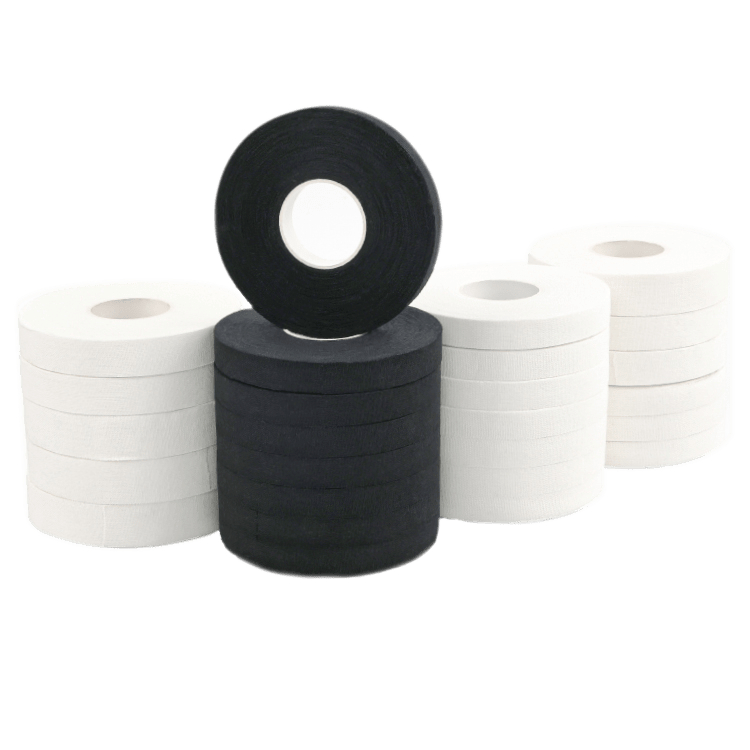
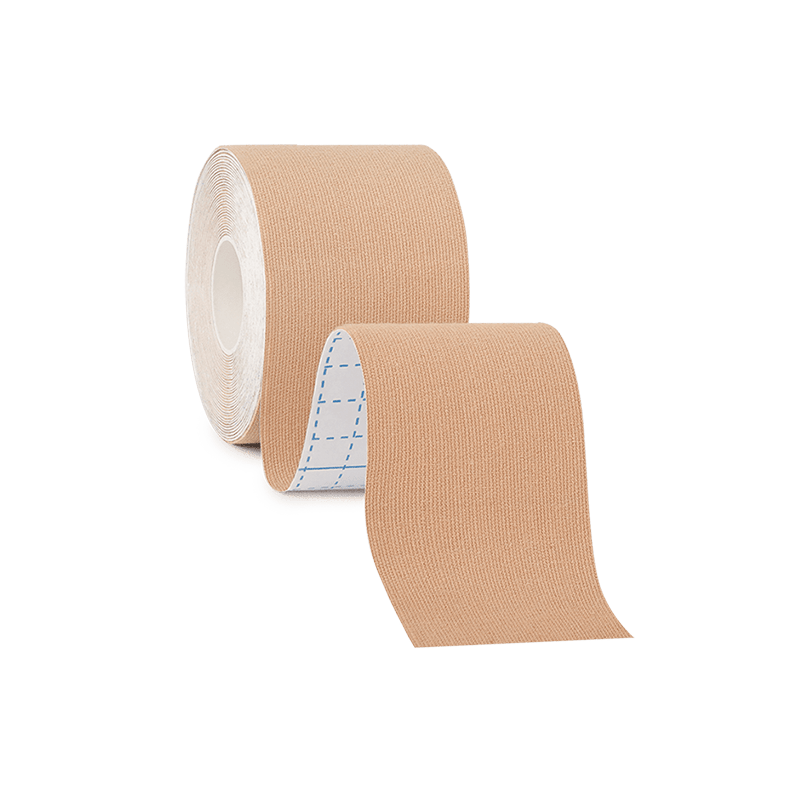
The answer depends on several factors—material, size, color, and shape all play a role. There are many different types of kinesiology tape, and understanding the differences can help you make better decisions, whether you're a user, retailer, or sourcing for your own brand.
In this guide, we break down the most important types of kinesiology tape clearly and practically.
Types of Kinesiology Tape by Material
Material is the foundation of performance. Among all types of kinesiology tape, this is the biggest differentiator.
Material Comparison Table
| Type | Main Material | Key Advantages | Stretching Direction | Best Use Scenarios | |
|---|---|---|---|---|---|
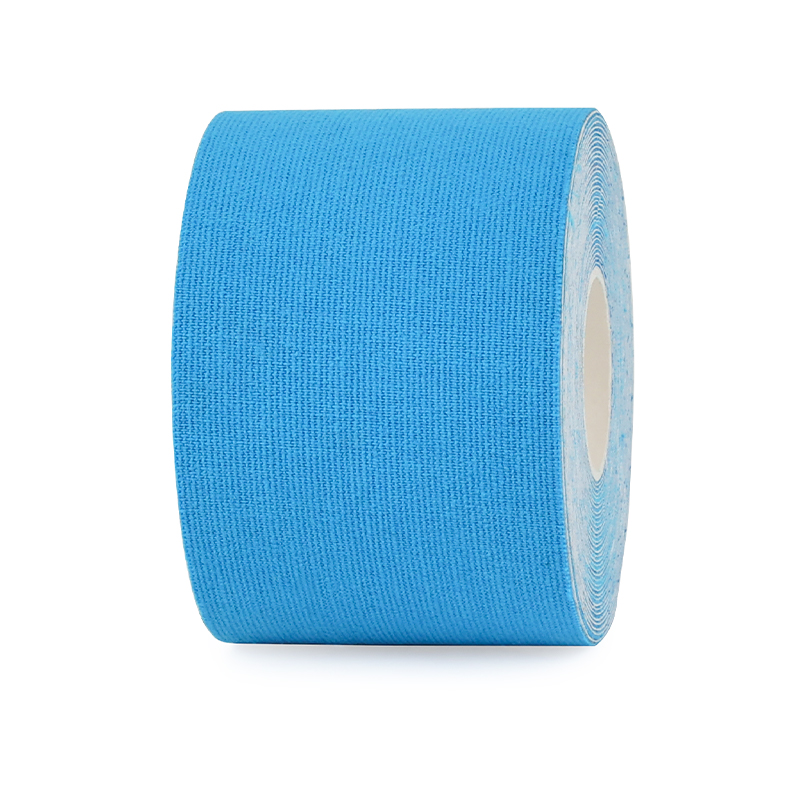 |
Cotton Kinesiology Tape | 95% Cotton + 5% Spandex | Breathable, soft, skin-friendly | Vertical | Daily use, rehab, and general sports |
 |
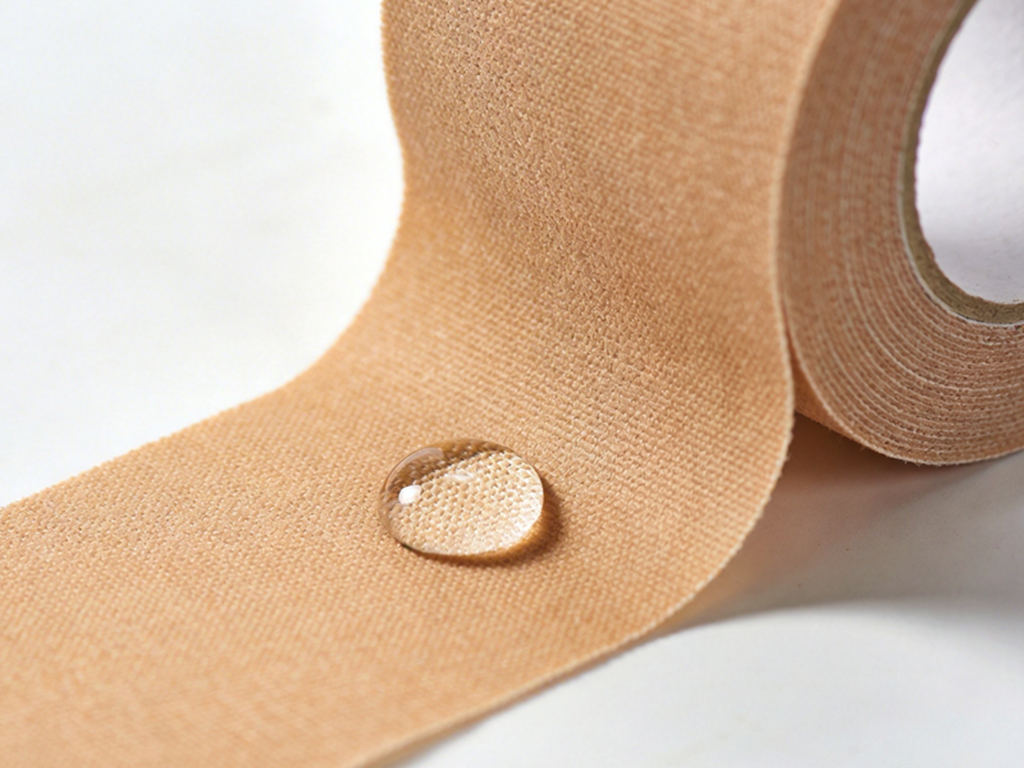
Synthetic Kinesiology Tape | 95% Rayon + 5% Spandex | Water-resistant, durable, Brighter colors | Vertical | Swimming, outdoor sports, high sweat |
 |
Nylon Kinesiology Tape | 80% Nylon + 20% Spandex | High elasticity, smooth texture, premium feel | Can be stretched in any direction. | Professional sports, high-performance use |
Adhesive Types in Kinesiology Tape (Real Market Comparison)
One of the most important factors that determines the performance of kinesiology tape is the adhesive system. In the global market, several types of adhesives are commonly used, and each one has a direct impact on durability, comfort, and overall performance.
Below is a practical comparison of the most widely used adhesive types.
🇯🇵 Japanese Acrylic Adhesive (Premium Grade)
Japanese acrylic adhesive is widely considered the most advanced option in the kinesiology tape industry.
It offers extremely strong and stable adhesion, with excellent resistance to external conditions such as:
- Temperature changes
- Humidity
- Sweat and moisture
Because of this stability, it is commonly used in high-end sports and medical-grade tapes.
While it may have a slightly higher skin sensitivity risk compared to some alternatives, the overall irritation rate remains relatively low when properly formulated.
👉 In short, this is the most reliable and high-performance adhesive on the market.
🇩🇪 German Henkel Acrylic Adhesive (Balanced Performance)
German acrylic adhesive is another widely respected option.
It provides strong adhesion and stable performance, but with a slightly lower tack level compared to Japanese acrylic.
Its biggest advantage is its very low skin irritation rate, making it especially suitable for medical applications and sensitive skin users.
👉 This is often chosen when comfort and safety are prioritized over maximum stickiness.
🇨🇳 Chinese Acrylic Adhesive (Cost-Effective Option)
Chinese acrylic adhesive is commonly used in mid-range kinesiology tape products.
It offers:
- Acceptable adhesion strength
- Reasonable durability
- Stable performance under normal conditions
However, compared with Japanese and German systems, both adhesion strength and environmental resistance are slightly lower.
👉 Its main advantage is cost efficiency, making it suitable for large-volume OEM production and price-sensitive markets.
🔥 Hot Melt Adhesive (Budget Segment)
Hot melt adhesive is frequently used in low-cost kinesiology tape products.
It is not necessarily “non-sticky,” but its main limitation is poor performance under moisture and sweat conditions.
In real sports environments where sweating is unavoidable, it tends to lose adhesion more quickly.
However, it can still be functional in low-intensity use cases such as:
- Office or sedentary environments
- Light pain relief applications
- Short-duration usage
Because of its extremely low cost, it remains popular in some budget markets, although it typically shows higher return and complaint rates when used for athletic purposes.
Types of Kinesiology Tape by Size
Size determines where and how the tape is used. Different types of kinesiology tape come in various widths to suit different body areas.
Size Comparison Table
| Size | Width | Typical Use Areas | Best Scenarios |
|---|---|---|---|
| 2.5 cm (1") | Narrow | Fingers, toes, thumb | Precision taping, small joints |
| 5 cm (2") | Standard | Shoulders, knees, back, wrists, ankles | Most common sports & rehab use |
| 7.5 cm (3") | Wide | Thighs, lower back | Large muscle support |
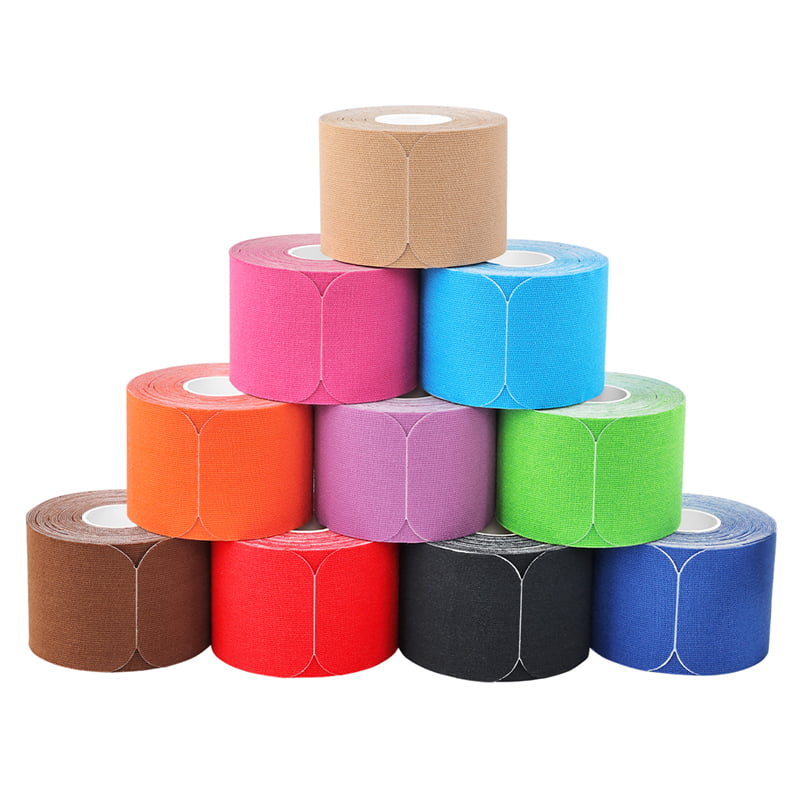
| Pre-Cut Strips | Various | Specific body parts | Beginners, retail products |
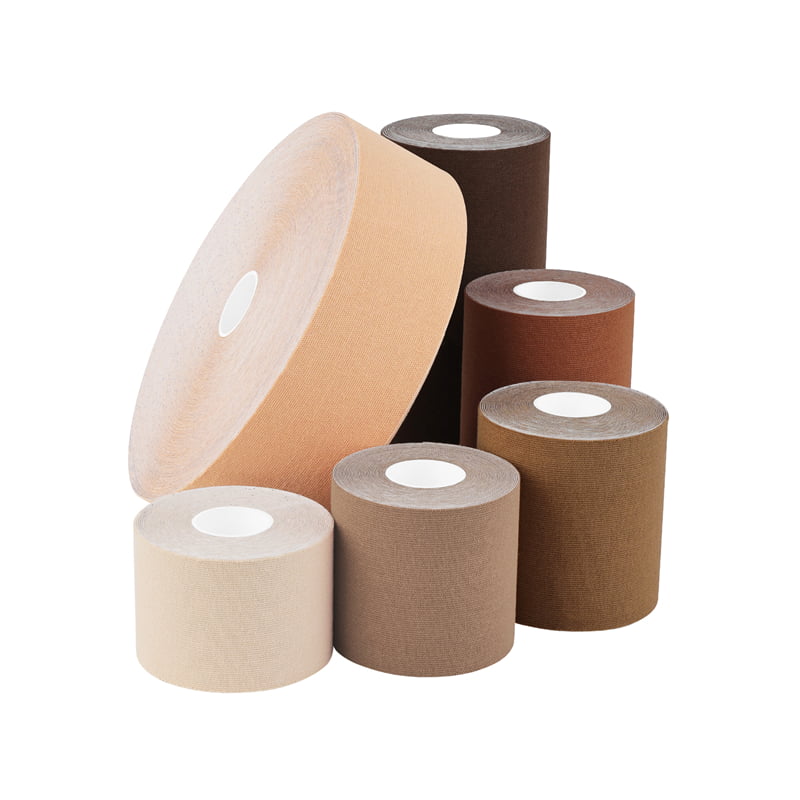
| Jumbo Rolls | Bulk size | Clinics, distributors | Professional and wholesale use |

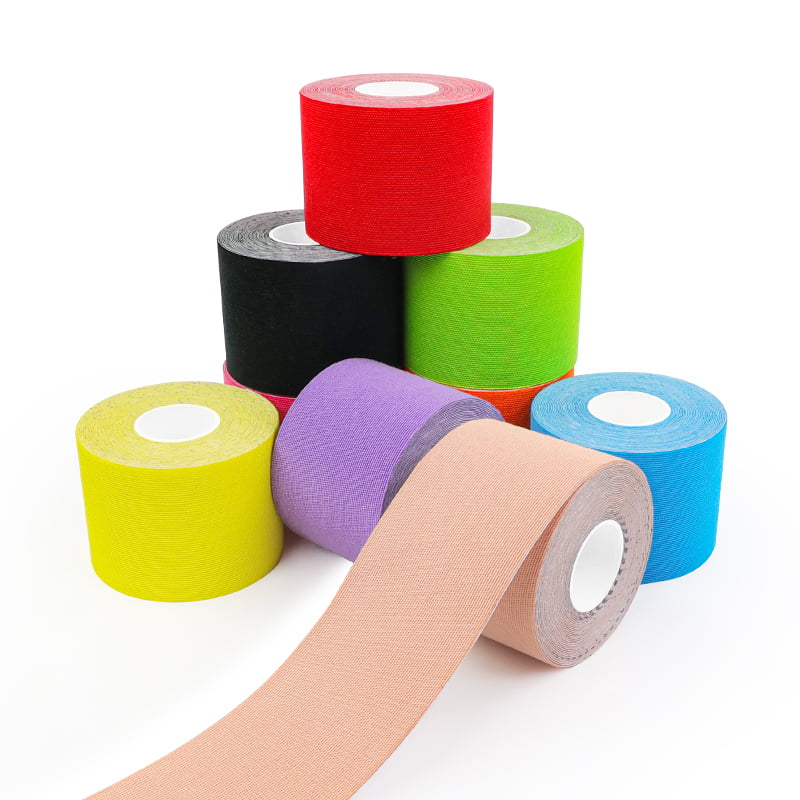
Types of Kinesiology Tape by Color
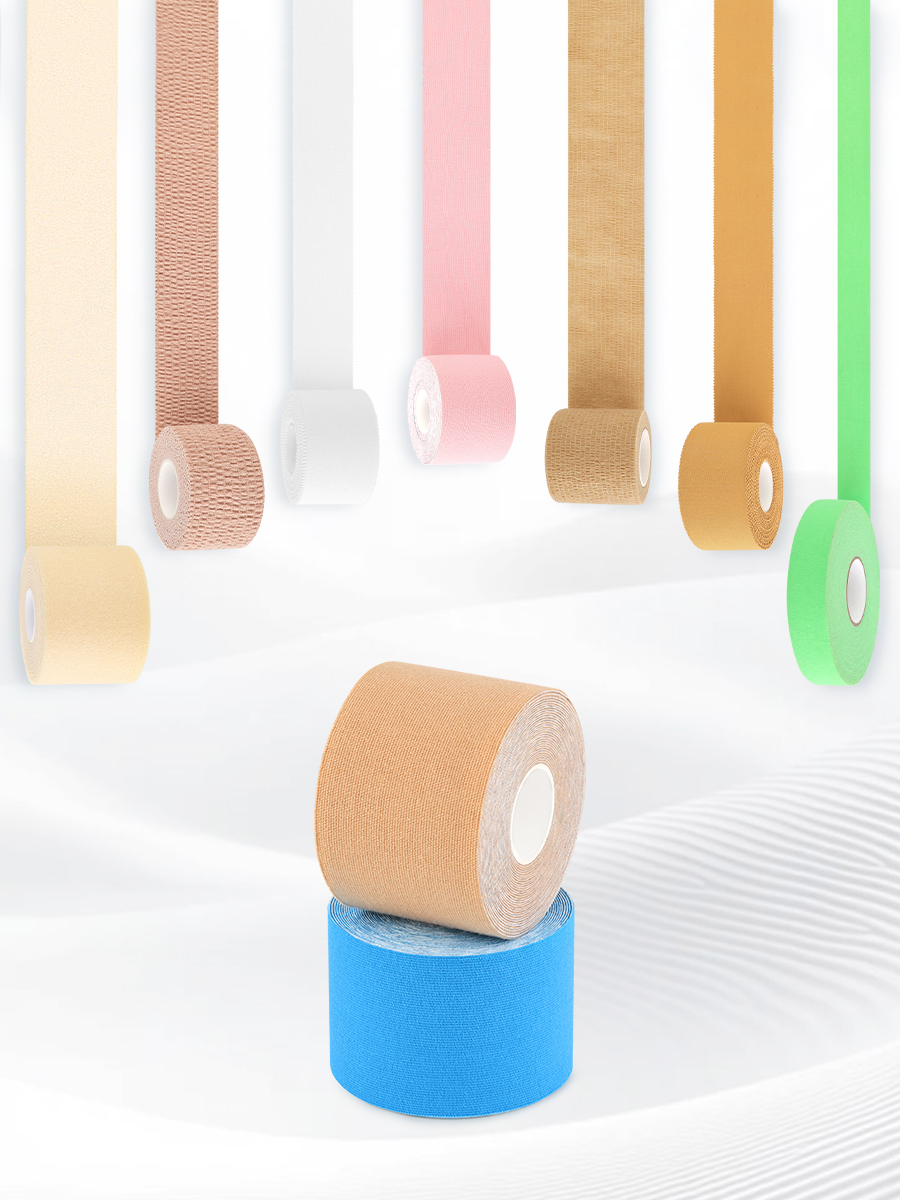
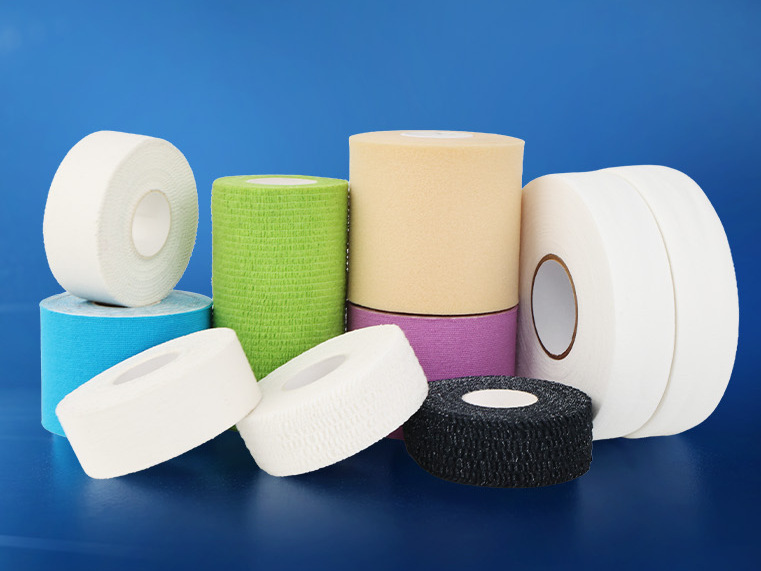
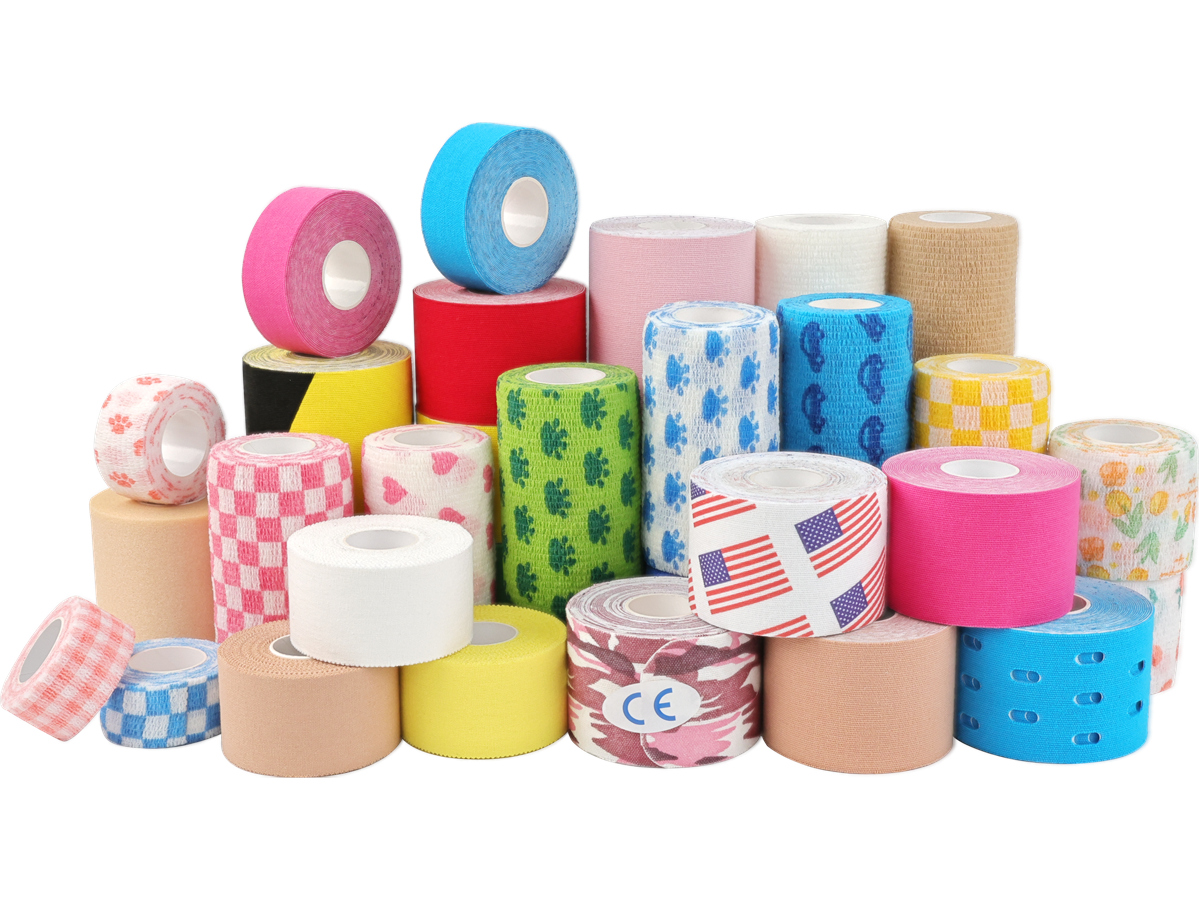
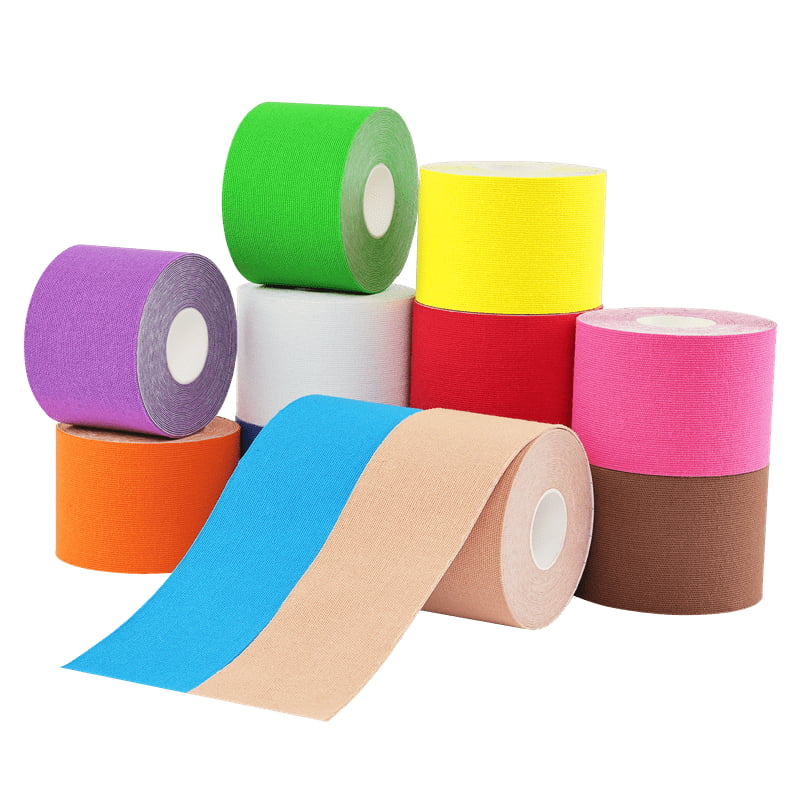
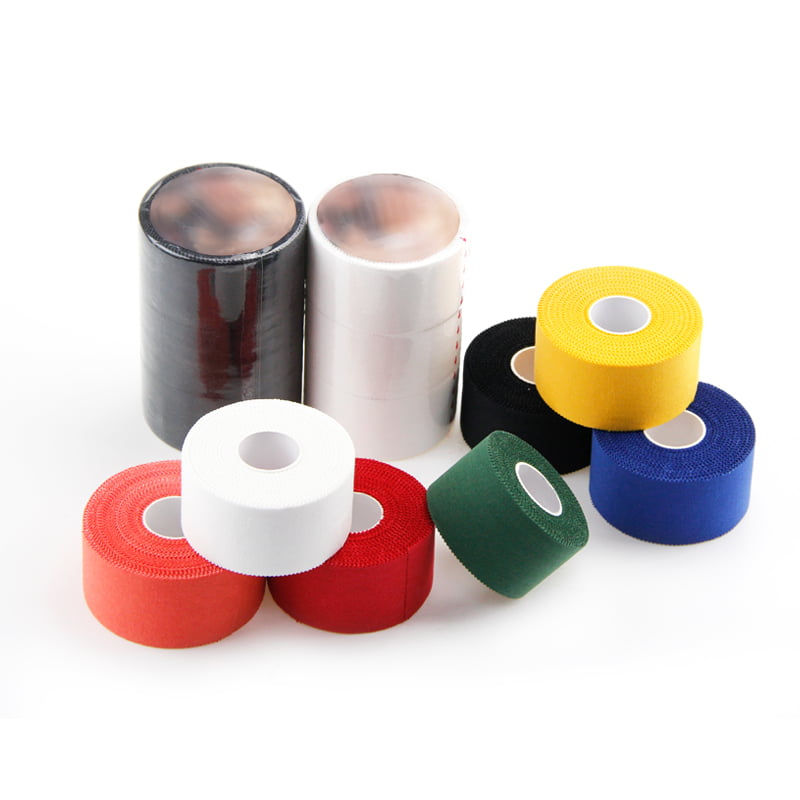
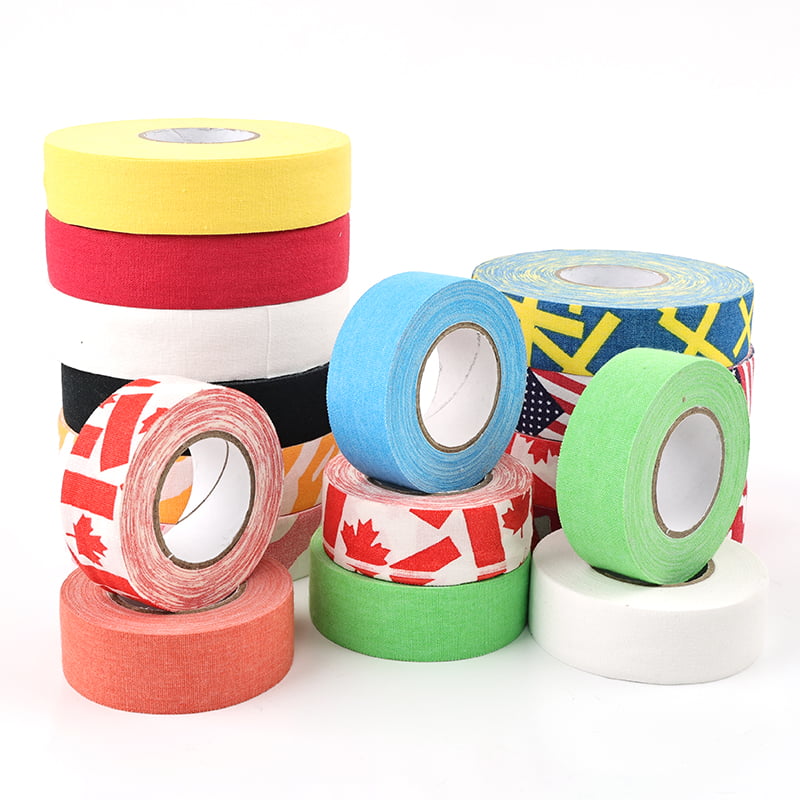
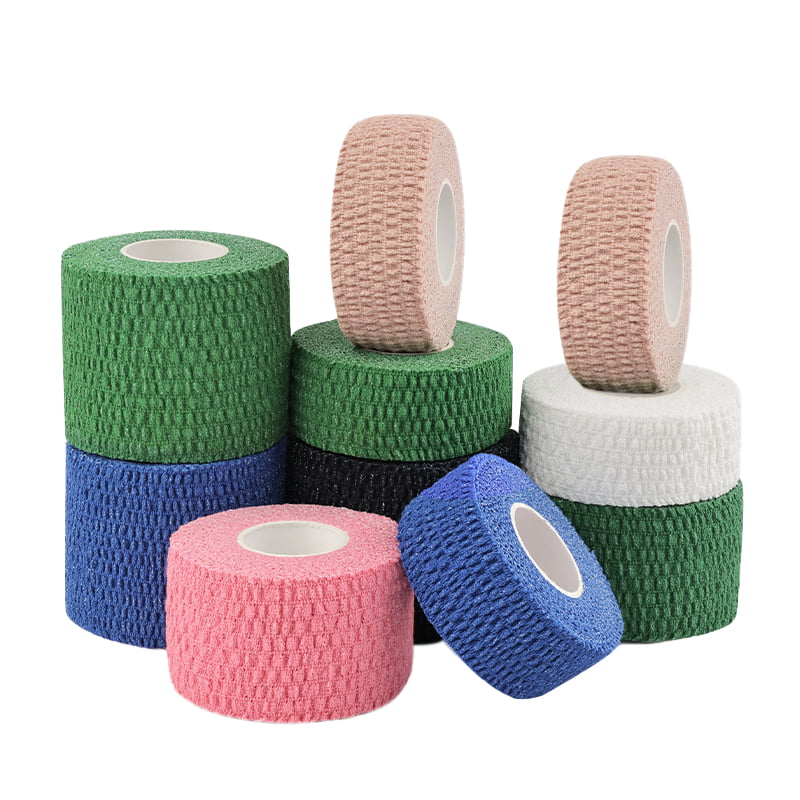
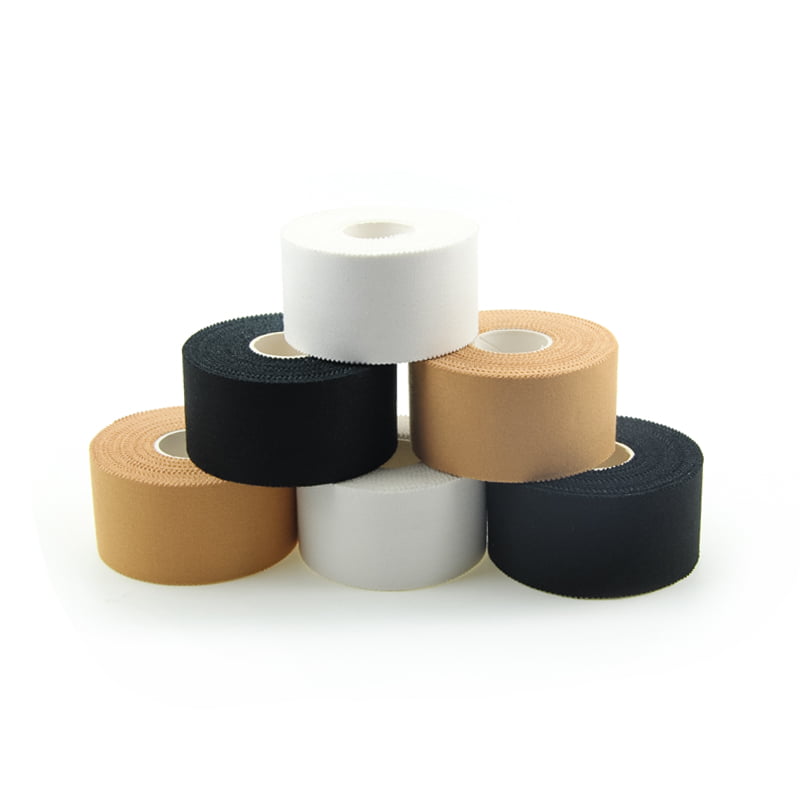
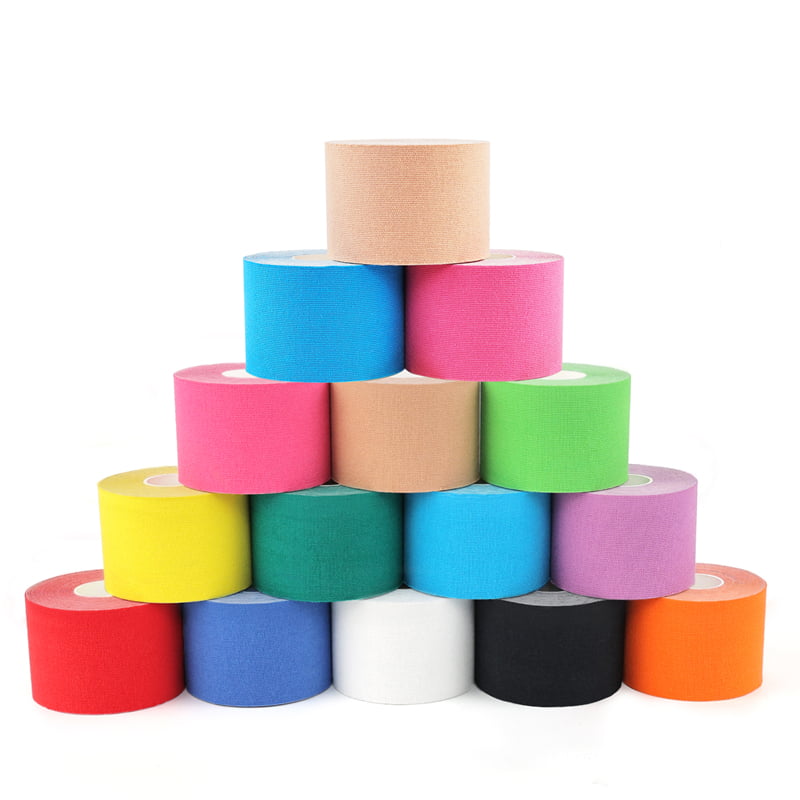
Color doesn’t change performance, but it plays a big role in user preference and branding. Different types of kinesiology tape are often chosen based on appearance as much as function.
Color Comparison Table
| Color Category | Colors | Visual Effect | Suitable Users / Scenarios |
|---|---|---|---|
| Skin Tone | White, Beige, Light Pink, skin | Low visibility, natural look | Fair skin, medical use |
| Neutral / Dark | Black, Brown, Tan | Durable look, hides dirt | Medium to dark skin tones, sports |
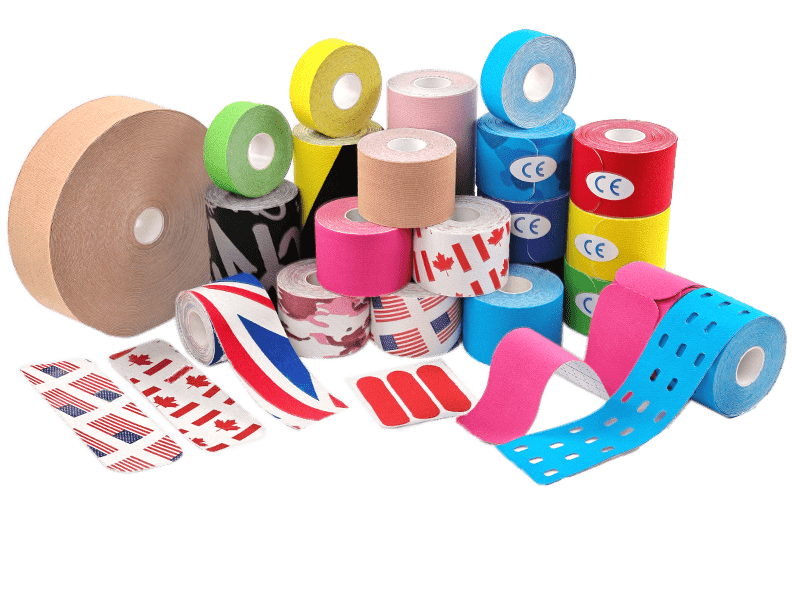
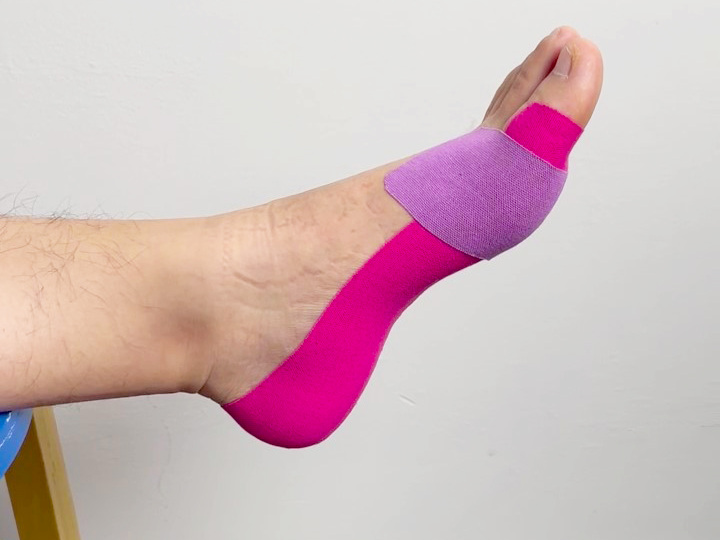
| Bright Colors | Pink, Blue, Orange, Yellow, Green, Red, Purple | Eye-catching, expressive | Retail, youth, active lifestyles |
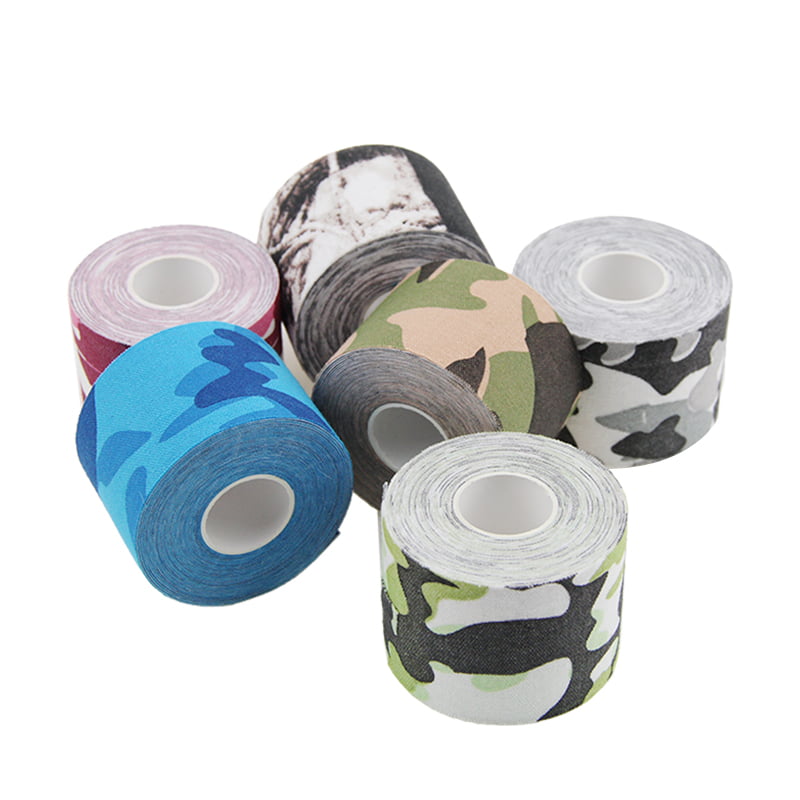
| Specialty Preference | Multi-color/rainbow | Identity & expression | Niche communities, lifestyle brands |
Types of Kinesiology Tape by Shape & Cut
Shape is where product design becomes more specialized. Among the many different types of kinesiology tape, pre-cut shapes are becoming increasingly popular.
Shape Comparison Table
| Shape Type | Structure | Function | Best Body Areas |
|---|---|---|---|
| I-Strip | Straight | General support | Suitable for use on the entire body. |
| Y-Strip | Split end | Muscle wrapping | Arms, legs |
| X-Strip | Split both ends | Joint support | Knees, elbows |
| Fan Strip | Multiple tails | Lymphatic drainage | Swelling areas |
| Pre-Cut Kits | Pre-designed shapes | Easy application | Shoulder, knee, back |
How to Choose the Right Type
With so many types of kinesiology tape available, the best choice depends on your situation:
- For daily sports: Cotton with Chinese Acrylic Adhesive
- For professional sports & sweat: Synthetic with Japanese Acrylic
- For sensitive skin: Cotton with Henkel Germany
- For branding: Custom colors and pre-cut shapes
Understanding these different types of kinesiology tape helps you avoid overpaying—or choosing the wrong product entirely.
For Brands & Buyers: Why Supply Matters
If you're sourcing types of kinesiology tape for resale or private label, product variation is only part of the equation.
Consistency, customization, and production capability matter just as much as performance.
Why VEEFUN (WEMADE) is a Reliable Manufacturer
VEEFUN is a reliable kinesiology tape factory specializing in multiple types of kinesiology tape for global markets.
What we offer:
- Cotton, synthetic, and nylon materials
- Full-size range (standard, jumbo, pre-cut)
- Custom colors, prints, and camouflage designs
- Pre-cut shapes and functional kits
- OEM & private label production
We help brands and distributors develop and scale product lines across all major types of kinesiology tape.
Final Thoughts
There’s no single “best” option—only the right one for your needs.
By understanding the different types of kinesiology tape, you can make better decisions whether you're buying for personal use or building a product line.
Looking to Customize Your Own Tape Line?
If you’re exploring different types of kinesiology tape for your brand or business, working with a manufacturer that can handle materials, sizes, colors, and shapes under one roof can make a big difference.
Feel free to reach out if you want help comparing options or developing your own product.